
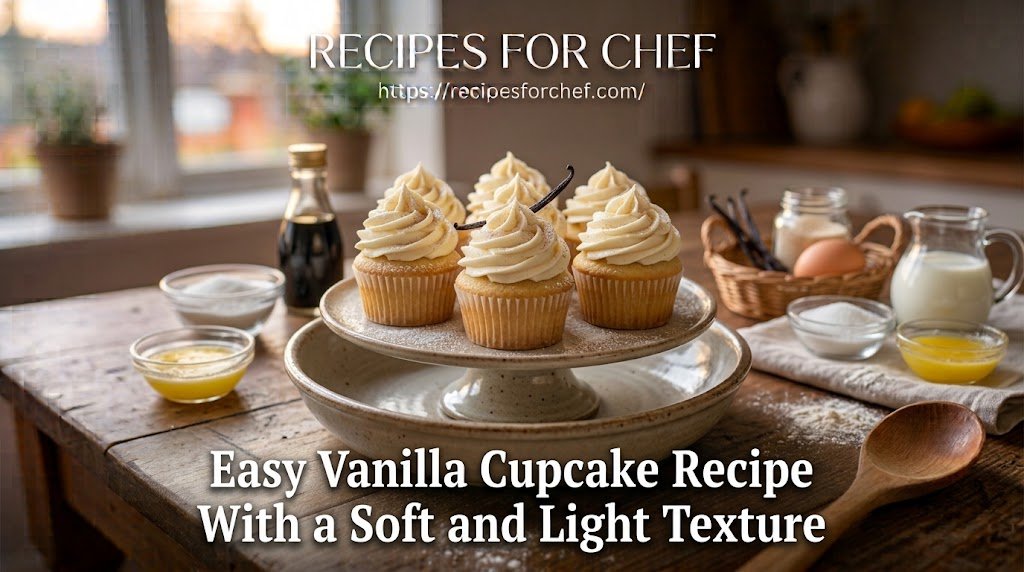
Vanilla cupcakes are a fundamental staple of home baking, yet achieving a bakery-quality crumb—one that is light, fluffy, and tender without feeling dry or oily—can be surprisingly tricky.
Many recipes rely on basic creaming methods that easily lead to dense, bread-like cakes if mixed even a few seconds too long. Others produce cupcakes that sink in the middle as they cool or develop a greasy bottom liner.
This recipe uses the reverse creaming method paired with a balance of butter and oil. You will learn how simple adjustments in technique, fat selection, and temperature control deliver soft, bakery-worthy vanilla cupcakes that rise into perfect, gentle domes every time.
Why This Recipe Works
Creating a light, pillowy cupcake comes down to controlling gluten development and capturing air evenly in the batter:
-
The Reverse Creaming Technique: Instead of beating butter and sugar together first, you coat the flour and dry ingredients with softened butter. This coats the flour proteins in fat before any liquid is introduced, significantly limiting gluten formation and guaranteeing a soft, melt-in-your-mouth texture.
-
Butter and Oil Combination: Pure butter provides that warm, classic vanilla flavor, but butter hardens as it cools. Adding a small amount of neutral vegetable oil retains moisture and keeps the crumb soft at room temperature.
-
Whole Eggs Plus Milk: Whole milk provides hydration and fat, while room-temperature eggs build structure and trap tiny air pockets that expand gently in the oven without causing the tops to crack.
Recipe Overview
-
Prep Time: 15 minutes
-
Baking Time: 16–18 minutes
-
Total Time: 35 minutes (plus cooling)
-
Yield: 12 standard cupcakes
Ingredients
To ensure your cupcakes turn out soft rather than dense, measure your flour accurately using a digital kitchen scale or the spoon-and-level method with a measuring cup.
+-----------------------------------------------------------------------+
| DRY INGREDIENTS                                                       |
+-----------------------------------------------------------------------+
| All-Purpose Flour      | 1 1/2 cups (180g)                            |
| Granulated Sugar       | 3/4 cup (150g)                                |
| Baking Powder          | 1 1/2 teaspoons                              |
| Fine Sea Salt          | 1/4 teaspoon                                 |
+-----------------------------------------------------------------------+
| WET & FAT INGREDIENTS                                                 |
+-----------------------------------------------------------------------+
| Unsalted Butter        | 6 tablespoons (85g), softened to room temp  |
| Vegetable Oil          | 2 tablespoons (30ml) neutral oil             |
| Large Eggs             | 2 (room temperature)                         |
| Pure Vanilla Extract   | 2 teaspoons (or vanilla bean paste)          |
| Whole Milk             | 1/2 cup (120ml), room temperature            |
+-----------------------------------------------------------------------+
[Image suggestion: Ingredients arranged on a table including flour, sugar, butter cubes, eggs, milk, and vanilla extract.]
Equipment Needed
-
Standard 12-cup muffin/cupcake tin
-
Paper cupcake liners
-
Electric hand mixer or stand mixer fitted with the paddle attachment
-
Medium mixing bowl and glass measuring cup
-
Silicone spatula
-
Standard ice cream/cookie scoop (for even portioning)
-
Wire cooling rack
Step-by-Step Method
Step 1: Prep the Oven and Pan
Preheat your oven to 350°F (175°C) with the oven rack positioned in the middle center. Line a standard 12-cup muffin tin with paper cupcake liners.
Chef’s Tip: Make sure your muffin pan is clean and dry before inserting paper liners. Any residual grease in the pan cups can cause the paper liners to peel away from the cupcakes as they cool.
Step 2: Combine Dry Ingredients
In a large mixing bowl or the bowl of your stand mixer, sift together the all-purpose flour, granulated sugar, baking powder, and salt. Whisk briefly by hand to ensure the leavening agent is distributed evenly throughout the flour.
Step 3: Coat the Flour with Butter (Reverse Creaming)
Add the softened, cubed butter and vegetable oil directly to the dry ingredient mixture. Mix on low speed for 1 to 2 minutes using an electric hand mixer or paddle attachment.
Watch the texture closely: it should transition from loose powder to a coarse, sand-like mixture with no remaining large chunks of butter. This step coats the flour in fat, preventing tough gluten strands from forming later.
Step 4: Whisk the Liquid Ingredients
In a separate glass measuring cup or small bowl, whisk together the room-temperature eggs, whole milk, and pure vanilla extract until uniform and smooth.
Step 5: Incorporate Liquids in Two Stages
With your mixer running on low speed, pour roughly half of the milk and egg mixture into the sandy flour-butter mixture. Turn the mixer up to medium speed and beat for 30 to 45 seconds to build the batter’s structure.
Scrape down the bottom and sides of the bowl with a silicone spatula. Turn the mixer back to low speed, stream in the remaining liquid mixture, and beat for another 20 to 30 seconds just until the batter is smooth and combined. Do not over-mix.
[Image suggestion: Smooth, pale vanilla cupcake batter being scraped down with a silicone spatula.]
Step 6: Portion the Batter
Use a standard cookie or ice cream scoop to divide the batter evenly among the 12 paper liners. Fill each cavity no more than 2/3 full (about 3 tablespoons of batter per liner).
Overfilling the liners causes the batter to spill over the edges, creating flat, heavy, or muffin-topped cupcakes that sink in the middle as they cool.
Step 7: Bake to Perfection
Place the tin on the center rack of your preheated oven. Bake at 350°F (175°C) for 16 to 18 minutes.
Test for doneness starting at the 15-minute mark:
-
Insert a wooden toothpick into the center of a middle cupcake; it should come out clean or with a few dry crumbs.
-
Touch the center of a cupcake gently with your finger—it should spring back immediately without leaving a dent.
-
The tops should look pale golden with a slight rise.
Step 8: Cool Properly
Remove the pan from the oven and set it on a wire rack for only 5 minutes. Carefully lift the cupcakes out of the hot tin and transfer them individually onto the wire rack to finish cooling completely (about 45–60 minutes).
Chef’s Tip: Leaving cupcakes inside a hot metal pan for too long traps steam at the bottom, which causes the paper liners to become soggy and peel off the sides.
Important Tips for Better Results
-
Temperature Matters: Eggs and milk must be at room temperature (~68°F–72°F / 20°C–22°C). Cold ingredients cause the butter to solidify into tiny cold lumps, resulting in an uneven rise and greasy pockets.
-
Use Real Vanilla Extract: Because vanilla is the dominant flavor profile, avoid artificial vanillin. Pure vanilla extract or vanilla bean paste provides a rich, sweet, natural flavor.
-
Don’t Overfill the Liners: Filling past 2/3 full traps excess air, causing the cupcakes to rise rapidly, overflow, collapse, and turn dense.
Common Mistakes and How to Avoid Them
1. The Cupcakes are Dense and Heavy
-
Cause: Over-measuring the flour or over-mixing the batter once the liquids are added.
-
Fix: Use a kitchen scale to measure flour (180 grams), and stop mixing the moment the wet ingredients disappear into the batter.
2. The Paper Liners are Peeling Off
-
Cause: Excess moisture trapped around the liners after baking.
-
Fix: Remove cupcakes from the warm metal tin after 5 minutes and let them cool on a wire rack so steam can escape.
3. The Tops are Wrinkled or Sunken
-
Cause: Opening the oven door too early, or over-activating the leavening agent by baking at too high a temperature.
-
Fix: Keep the oven door closed for the first 14 minutes of baking to maintain a steady temperature.
Substitutions and Variations
| Ingredient | Substitution / Modification | Impact on Final Result |
| All-Purpose Flour | Cake Flour (1:1 ratio by weight) | Produces an even softer, finer, lighter crumb structure. |
| Whole Milk | Buttermilk or Milk + Sour Cream | Adds a slight tang and extra moisture due to higher fat and acidity. |
| Vanilla Extract | Vanilla Bean Paste | Adds visible black vanilla specks and a deeper aroma. |
Storage and Reheating
-
Room Temperature: Store unfrosted cupcakes in an airtight container at room temperature for up to 3 days. Avoid refrigerating unfrosted cupcakes, as cold air dries out wheat starches quickly.
-
Freezing: Wrap unfrosted, fully cooled cupcakes individually in plastic wrap, then place them inside a freezer-safe zip-top bag. Freeze for up to 2 months. Thaw at room temperature for 30–45 minutes before frosting and serving.
Frequently Asked Questions
Why did my vanilla cupcakes turn out dry?
Dry cupcakes are usually caused by adding too much flour (scooping directly with a measuring cup packs in up to 25% extra flour) or leaving them in the oven just a couple of minutes too long.
Can I use cake flour instead of all-purpose flour?
Yes. Cake flour has a lower protein content (around 7–8%) compared to all-purpose flour (10–12%), which produces an even delicate, extra-soft crumb.
How do I prevent my cupcakes from sinking in the middle?
Ensure your baking powder is fresh, measure it accurately, avoid opening the oven door during early baking, and do not fill liners more than 2/3 full.
Why do all ingredients need to be at room temperature?
Room-temperature milk and eggs blend seamlessly into the creamed butter and flour, creating an emulsion that traps air evenly for a uniform rise.
Can I make these cupcakes ahead of time?
Yes. Bake them 1 day ahead, cool completely, and store in an airtight container at room temperature. Frost them on the day of your event for the freshest texture.
Final Thoughts
Baking soft, light vanilla cupcakes at home is simple when you focus on correct technique. By using the reverse creaming method, maintaining room-temperature ingredients, and avoiding the urge to overfill your liners, you get soft, bakery-quality cupcakes with a delicate crumb every single time. Let them cool completely on a wire rack before piping on your favorite buttercream.