
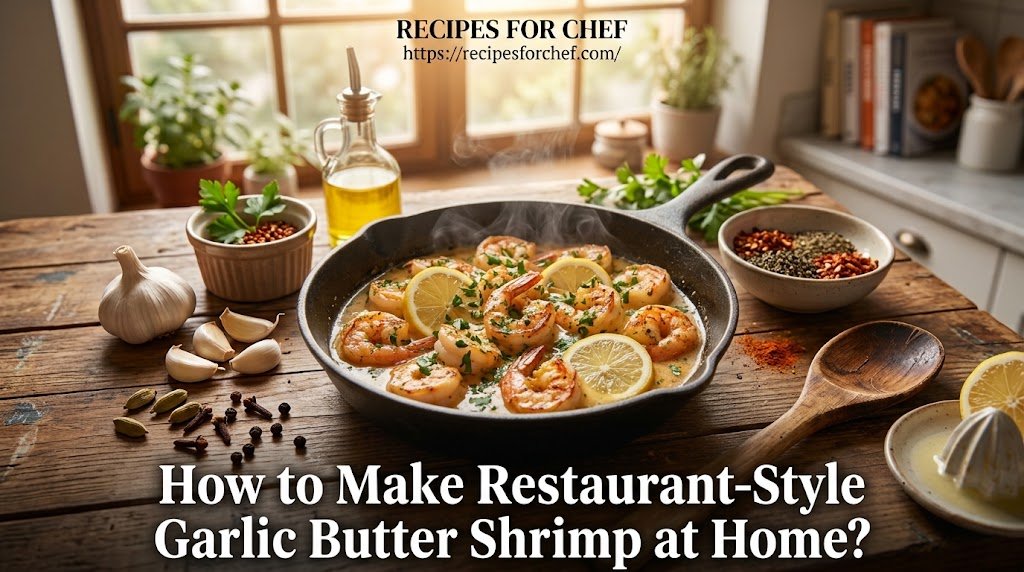
Garlic butter shrimp is one of those dishes that can go from raw ingredients to dinner in minutes. The challenge is getting those few minutes right. Shrimp cook quickly, garlic can burn quickly, and butter can turn from fragrant to overly browned if the pan is too hot.
The best version has plump, tender shrimp coated in a glossy garlic butter sauce with enough lemon and herbs to keep the flavour fresh. You do not need a complicated marinade or a long ingredient list. The important details are choosing suitable shrimp, drying them properly, using controlled heat, and knowing exactly when to stop cooking.
This method is useful for a quick dinner, but it also gives you a foundation for serving garlic butter shrimp with pasta, rice, crusty bread, or vegetables.
Recipe Overview
Preparation time: 10 minutes
Cooking time: 8–10 minutes
Total time: About 20 minutes
Servings: 4
The shrimp cook quickly, so have all the ingredients prepared before you start heating the pan.
Ingredients
For the Shrimp
- 680 g large shrimp, peeled and deveined
- ½ teaspoon salt
- ½ teaspoon black pepper
- ½ teaspoon paprika
- 1 tablespoon olive oil
For the Garlic Butter Sauce
- 4 tablespoons unsalted butter
- 5–6 cloves garlic, finely minced
- 2 tablespoons fresh lemon juice
- 1 teaspoon lemon zest, optional
- ¼ teaspoon red pepper flakes, optional
- 2 tablespoons chopped fresh parsley
- 2 tablespoons chicken or seafood stock, optional
- Salt, to taste
- Black pepper, to taste
Large shrimp are easier to manage than very small shrimp because they give you a little more time between properly cooked and overcooked.
If using frozen shrimp, thaw them safely in the refrigerator or according to appropriate food-safety guidance before cooking.
Equipment
You only need a few basic tools:
- Large skillet
- Tongs or a wide spatula
- Paper towels
- Cutting board
- Sharp knife
- Small bowl
- Instant-read thermometer, if available
A large skillet is particularly useful because shrimp should have enough space to sit directly against the hot surface.
Prepare the Shrimp Properly
If your shrimp still have shells, remove the shells and legs. You can leave the tails attached if you like the appearance, but removing them makes the shrimp easier to eat.
Check the back of each shrimp for the dark digestive vein. If present, make a shallow cut along the back and remove it.
Rinse only if needed according to the product’s handling instructions, then pat the shrimp very thoroughly dry with paper towels.
This step is more important than it may seem.
Wet shrimp release water into the skillet. Instead of quickly developing a lightly browned surface, they can begin steaming. You want enough heat and direct contact to cook the shrimp quickly while keeping the butter sauce from becoming watery.
Season the dried shrimp with salt, black pepper, and paprika.
Do not season heavily. The butter, garlic, lemon, and any stock added later will contribute additional flavour.
[Image suggestion: Peeled and deveined shrimp thoroughly dried and seasoned before cooking]
Prepare Everything Before Cooking
Garlic butter shrimp moves quickly once the pan gets hot.
Mince the garlic before you start.
Measure the butter.
Chop the parsley.
Juice the lemon.
If you are serving the shrimp with pasta or rice, have that prepared or nearly ready before you begin cooking the shrimp.
This prevents the garlic from sitting in a hot pan while you search for another ingredient.
Heat the Skillet
Place a large skillet over medium-high heat.
Add the olive oil and allow it to heat until it becomes fluid and lightly shimmers.
The oil should not be smoking heavily.
Add the shrimp in a single layer.
You should hear a steady sizzle as they touch the skillet.
If all of the shrimp do not fit comfortably, cook them in two batches. Crowding the skillet causes the shrimp to release more moisture, making it harder to get good surface colour.
Cook the Shrimp Without Overcooking Them
Cook the first side for roughly 1½–2 minutes, depending on the size of the shrimp.
You are looking for the flesh to begin changing from translucent to opaque.
Turn the shrimp and cook the second side.
Shrimp do not need a long cooking time. As soon as they are opaque and properly cooked, move them to a clean plate.
The FDA advises cooking shrimp until the flesh is pearly and opaque.
If you use an appropriate food thermometer, follow the food-safety guidance applicable to your local authority and the particular seafood product.
The most common mistake here is leaving the shrimp in the skillet while preparing the sauce. Because shrimp are small, even another minute or two can make a noticeable difference in texture.
[Image suggestion: Large shrimp changing from translucent to opaque while cooking in a skillet]
Build the Garlic Butter Sauce
Reduce the heat to medium or medium-low.
Add the butter to the same skillet.
Once it begins to melt, add the minced garlic.
Cook for around 30–60 seconds while stirring frequently.
The garlic should become fragrant without turning dark brown.
This is an important distinction. You want the garlic to perfume the butter, not fry until bitter.
Add the red pepper flakes if using.
Pour in the lemon juice and optional stock.
Stir and scrape the bottom of the skillet gently to loosen any browned pieces left behind by the shrimp.
Let the mixture simmer briefly.
The sauce should become glossy and aromatic. It does not need to boil vigorously.
Return the Shrimp to the Pan
Add the cooked shrimp back to the skillet.
Toss them gently through the garlic butter sauce.
Cook only long enough to warm them and coat them with the sauce.
Add the lemon zest and chopped parsley near the end.
Taste the sauce.
It should have a clear garlic and butter flavour, with enough lemon to keep it from tasting heavy.
If it tastes flat, add a small pinch of salt.
If it tastes too rich, a little more lemon juice can brighten it.
Make adjustments gradually. Garlic butter sauce is easy to over-season because several ingredients contribute salt and flavour.
[Image suggestion: Finished shrimp being tossed through a glossy garlic butter sauce with parsley and lemon]
What the Finished Shrimp Should Look Like
Properly cooked shrimp should have an opaque, pearly flesh rather than a translucent centre. The shrimp should also curl, but the shape alone is not a reliable way to determine doneness.
A gently curled shrimp can still be tender.
Shrimp that have tightened into very small, firm circles have usually been cooked too long.
When you bite into a properly cooked shrimp, it should feel tender and springy rather than rubbery or tough.
Because shrimp vary in size, use the visual and texture cues together with appropriate food-safety guidance rather than relying on one exact cooking time.
Why Drying the Shrimp Matters
One of the easiest improvements you can make is drying the shrimp before they enter the skillet.
Shrimp contain a lot of moisture. If their surface is wet from thawing or rinsing, the pan has to spend energy evaporating that water before strong browning can happen.
The result can be pale shrimp sitting in a pool of liquid.
Patting them dry helps the shrimp make better contact with the hot skillet.
It also helps the garlic butter sauce stay concentrated rather than becoming diluted with excess water.
How to Avoid Burnt Garlic
Garlic has a short window between fragrant and burnt.
The mistake is usually adding finely minced garlic to a very hot pan and leaving it there while the cook focuses on another task.
For this recipe, the shrimp are cooked first and the heat is reduced before the garlic goes into the butter.
That gives you much better control.
Stir the garlic frequently and watch its colour.
Once it smells strongly fragrant and has softened slightly, move on to the next step.
If the garlic becomes dark brown and smells bitter, it is better to start the sauce again than try to cover the flavour with more butter or lemon.
Common Mistakes and How to Avoid Them
Using Wet Shrimp
Excess surface water can prevent browning and dilute the sauce.
Pat the shrimp thoroughly dry before seasoning.
Overcrowding the Pan
Shrimp need direct contact with the skillet.
If they are packed together, they can steam rather than sear.
Cook in batches when necessary.
Cooking the Shrimp While Making the Sauce
This is probably the easiest way to overcook them.
Cook the shrimp, remove them, build the sauce, and then return them briefly at the end.
Burning the Garlic
Garlic does not need to be cooked for several minutes.
Keep the heat moderate and stir often.
Adding Too Much Lemon
Lemon should brighten the butter sauce, not overpower it.
Start with a small amount and add more after tasting.
Using Excessive Butter
More butter does not necessarily create a better sauce.
A moderate amount emulsified with the shrimp juices, lemon, and stock is enough to coat the shrimp.
How to Make the Sauce More Glossy
The sauce should look smooth and shiny rather than like a pool of melted butter.
The easiest way to improve its texture is to keep the heat moderate and stir while adding the lemon juice and stock.
The small amount of liquid helps the butter combine with the other ingredients instead of simply sitting separately in the pan.
You can also swirl the skillet gently as the sauce simmers.
Do not boil it aggressively.
If the sauce becomes too thick, add a small splash of stock or water.
If it seems too loose, let it simmer briefly before returning the shrimp.
Substitutions
Shrimp Size
Medium shrimp can be used, but they will cook faster. Watch them closely.
Extra-large shrimp can also work and may need a little more cooking time.
Butter
Unsalted butter gives you more control over the final salt level. Salted butter can be used, but taste before adding additional salt.
Fresh Garlic
Fresh garlic gives the strongest flavour, but garlic powder can be used in a pinch. Add it sparingly because the flavour behaves differently from fresh garlic.
Lemon
Fresh lemon juice is preferable for this sauce because it gives a brighter flavour. Bottled lemon juice can work when necessary.
Herbs
Fresh parsley is a simple choice, but chopped chives or cilantro can be used if they suit the rest of the meal.
Stock
Chicken or seafood stock can add depth, but it is optional. Water can be used instead if you simply want a lighter sauce.
Variations You Can Try
Spicy Garlic Butter Shrimp
Add red pepper flakes with the garlic.
For more heat, add a small amount of cayenne, but taste before adding more.
Lemon Herb Shrimp
Increase the lemon zest slightly and finish with extra fresh parsley.
This version works particularly well with rice or a simple green salad.
Creamy Garlic Butter Shrimp
After the garlic has cooked, add a small amount of cream and let it gently simmer before returning the shrimp.
The sauce will become richer and thicker, so avoid adding too much.
Garlic Butter Shrimp Pasta
Cook your pasta separately and reserve some of the pasta water.
Toss the cooked pasta with the garlic butter sauce, adding a small splash of pasta water to help the sauce coat the noodles.
Return the shrimp at the very end.
Serving Suggestions
Garlic butter shrimp is flexible enough to serve in several ways.
For a quick dinner, spoon the shrimp and sauce over steamed white rice or brown rice.
Pasta is another natural pairing. Spaghetti, linguine, angel hair, and short pasta shapes can all work.
Crusty bread is especially useful because the butter sauce is too good to leave behind.
For a lighter meal, serve the shrimp with steamed broccoli, green beans, asparagus, or a simple salad.
You can also place the shrimp over cooked couscous or another grain.
The sauce is rich enough that you do not need a complicated side dish.
[Image suggestion: Garlic butter shrimp served over rice with lemon wedges and fresh parsley]
Storage and Reheating
Shrimp are best when freshly cooked because their texture can become firmer after refrigeration and reheating.
If you have leftovers, transfer them to a covered container and refrigerate promptly.
The FDA recommends refrigerating perishable foods within two hours, or within one hour when the surrounding temperature is above 90°F (32°C). Your refrigerator should be kept at 40°F (4°C) or below.
When reheating, use gentle heat.
A skillet over low heat works well. Add a small splash of water or stock if the butter sauce has thickened.
Heat the shrimp only until they are warmed through. Repeated or prolonged heating can make them rubbery.
If you are reheating the dish as a leftover meal, FDA guidance recommends reheating leftovers to 165°F (74°C).
Food Safety When Handling Shrimp
Keep raw shrimp separate from ready-to-eat foods and use clean utensils and plates for cooked seafood. Raw seafood can carry harmful microorganisms, so avoid placing cooked shrimp back onto a plate that held the raw shrimp unless the plate has been thoroughly washed.
The FDA recommends cooking shrimp until the flesh is pearly and opaque.
If you are using frozen shrimp, thaw them safely in the refrigerator, in cold water, or in the microwave when you will cook them immediately. Do not thaw seafood on the kitchen counter.
When in doubt about seafood that has been stored improperly or left unrefrigerated too long, it is safer to discard it.
Frequently Asked Questions
How do I keep garlic butter shrimp from becoming rubbery?
The main thing is to avoid overcooking. Shrimp cook quickly, so remove them from the skillet once they are opaque and properly cooked. Build the sauce separately and return the shrimp only briefly at the end.
Should I use fresh or frozen shrimp?
Both can work well. Frozen shrimp are often convenient and can produce excellent results when properly thawed and dried. Fresh shrimp should also be kept properly chilled until cooking.
Why are my shrimp releasing so much water?
They may have been wet when they entered the skillet, or the pan may have been overcrowded. Pat shrimp dry and cook them in batches when necessary.
Can I leave the tails on?
Yes. Leaving the tails on can make the shrimp look attractive when serving and can add some flavour during cooking. Removing them makes the shrimp easier to eat, so the choice is mostly practical.
Why did my garlic butter sauce separate?
Butter naturally contains water and milk solids, so a sauce can separate when exposed to excessive heat or when the ingredients are not combined well. Keep the heat moderate, add the liquid gradually, and stir or swirl the pan as the sauce comes together.
Can I make garlic butter shrimp ahead of time?
You can prepare the ingredients ahead, but the shrimp themselves are best cooked shortly before serving. Since they cook so quickly, making them fresh usually gives you better texture.
What can I serve with garlic butter shrimp?
Rice, pasta, crusty bread, couscous, potatoes, steamed vegetables, and simple salads all work well. Choose a side that can complement or absorb some of the garlic butter sauce.
Final Thoughts
Good garlic butter shrimp depends more on timing than complexity. Dry the shrimp well, give them enough space in the skillet, cook them briefly, and lower the heat before adding the garlic and butter.
The sauce should be glossy, fragrant, and balanced rather than overwhelmingly rich. A little lemon at the end helps bring the butter and garlic together without making the dish complicated.
Most importantly, do not leave the shrimp cooking while you prepare everything else. Have your ingredients ready before the pan gets hot. That small habit gives you much more control over the final texture and makes this quick dinner far easier to get right.