
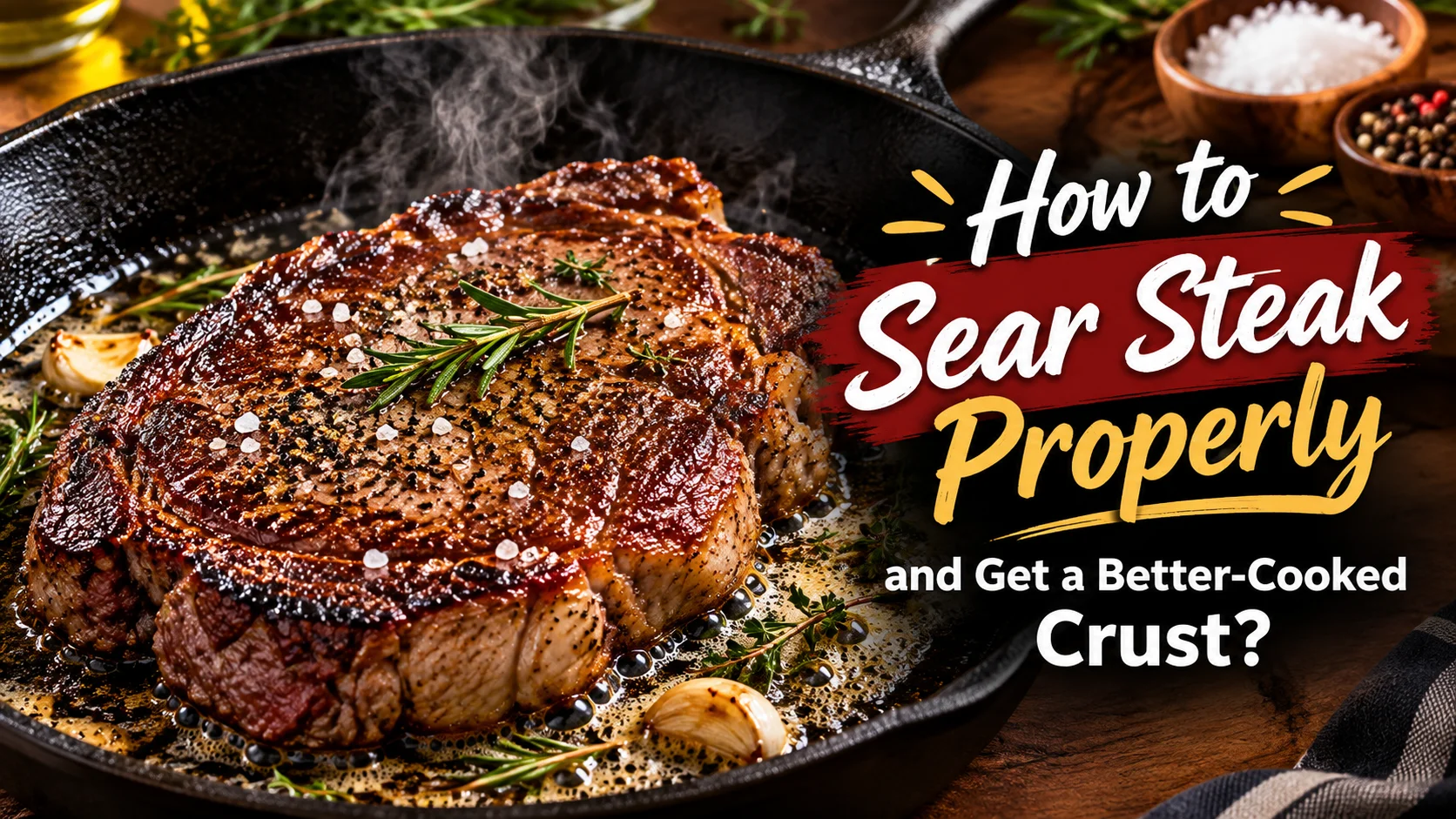
A good steak crust is not created by simply turning the heat as high as possible. The surface needs to be dry, the pan needs to be properly heated, and the steak needs enough contact with the cooking surface to develop deep browning without burning.
The inside matters too. A steak can have an impressive dark crust and still be cooked differently from what you intended. The easiest way to control both is to think of the crust and the centre as two separate cooking jobs.
This guide explains how to sear steak in a skillet, how to prepare the meat before it reaches the pan, when to turn it, how to use butter without burning it, and how to recognize when the steak is ready.
What Makes a Good Steak Crust?
The browned exterior of a steak develops through surface browning reactions that occur when the meat gets hot and relatively dry. Excess moisture works against this process because the surface temperature stays limited while water evaporates.
That is why a wet steak can take longer to brown.
A strong crust should look deeply browned rather than pale grey. It should have a dry, firm surface and a savoury roasted flavour.
The goal is not to burn the outside. Very dark, bitter areas usually indicate that the pan, oil, seasoning, or butter has been exposed to excessive heat for too long.
Choosing the Right Steak
You can sear several cuts successfully, but thickness makes a major difference.
Ribeye has enough internal fat to remain flavourful while developing a strong crust. New York strip is another good choice because it has a substantial lean section and a defined fat edge.
Tenderloin can also be seared, although its lower fat content means the cooking process benefits from careful temperature control.
For this method, a steak around 1 to 1½ inches (2.5–4 cm) thick is easier to manage than a very thin steak.
A very thin steak can reach its desired internal temperature before a substantial crust has time to develop.
Bone-in steaks can also be used, but they may need more attention around the thicker areas near the bone.
Recipe Overview
Preparation time: 10 minutes
Cooking time: About 8–12 minutes
Resting time: 5–10 minutes
Total time: About 25–30 minutes
Servings: 2
The exact cooking time depends heavily on steak thickness, starting temperature, pan type, and your preferred level of doneness.
A thermometer is much more reliable than a fixed cooking time.
Ingredients
- 2 steaks, about 1–1½ inches thick
- 1–1½ teaspoons kosher salt, or an appropriate amount of fine salt
- ½ teaspoon freshly ground black pepper
- 1 tablespoon high-heat cooking oil
- 1 tablespoon unsalted butter
- 2 cloves garlic, lightly crushed, optional
- 1–2 sprigs fresh rosemary or thyme, optional
You do not need all of the optional ingredients. Salt, pepper, oil, and a properly heated pan are enough to produce a good seared steak.
Equipment
A heavy skillet is the most useful piece of equipment.
Cast iron works particularly well because it retains heat when the cold steak enters the pan. Stainless steel can also produce excellent browning when properly preheated.
You will also need tongs, paper towels, a cutting board, and an instant-read meat thermometer.
Avoid using a nonstick pan at extremely high temperatures. Follow the manufacturer’s guidance for your cookware.
Prepare the Steak for Searing
Remove the steak from its packaging and pat the surface thoroughly dry with paper towels.
Do not skip this step.
The surface should feel dry rather than wet or slippery. Pay particular attention to the edges and any areas where moisture has collected.
If the steak has a thick fat edge, you can lightly score the fat at intervals without cutting deeply into the meat. This can help the edge render more evenly and reduce excessive curling.
Season the steak generously with salt and black pepper.
If you are salting well ahead of cooking, refrigerating the steak uncovered can allow the surface to dry further. If you are cooking soon after seasoning, simply make sure the steak is dry before it enters the pan.
Heat the Pan
Place your skillet over medium-high heat.
Give it enough time to become properly hot. The exact heating time depends on the pan and your stovetop, so pay attention to the cooking surface rather than following a fixed number of minutes.
Add the oil once the pan is hot.
The oil should become fluid and shimmer. Heavy smoking is a sign that the pan or oil is too hot.
You want enough heat to brown the steak quickly, but you also need enough control to prevent the outside from burning before the centre reaches the desired temperature.
Place the Steak in the Pan
Lower the steak carefully into the skillet.
It should produce an immediate, steady sizzle.
If you are cooking two steaks, make sure they have room around them. Crowding the pan can lower the surface temperature and create more moisture around the meat.
Once the steak is down, leave it alone for a while.
Constantly moving the steak can interfere with crust development.
After several minutes, gently lift one edge with tongs. If the underside has developed a deep brown crust, the steak is ready to turn.
If it is still pale, give it more time.
[Image suggestion: Steak making full contact with a hot skillet while a golden-brown crust develops]
How Often Should You Flip a Steak?
There is no rule that a steak must be flipped only once.
You can turn it when the first side has developed the crust you want. After that, flipping more frequently can help manage the internal temperature and reduce the risk of one side becoming excessively dark.
For a thick steak, turning it periodically can be useful because it gives you more control over the balance between crust and interior doneness.
The important thing is not the number of flips. It is whether the steak is developing the crust and internal temperature you want.
Use the Fat Edge
If the steak has a substantial fat cap or edge, stand it upright with tongs near the end of cooking.
Press the fat edge against the skillet for 30–60 seconds or until it has browned and rendered some fat.
This gives the edge a more appealing texture and prevents a thick strip of pale, rubbery fat from remaining on the finished steak.
Be careful when doing this because rendered fat can splatter.
Adding Butter Without Burning It
Butter adds a rich flavour, but it contains milk solids that can burn when exposed to very high heat.
For that reason, do not add the butter at the beginning when the pan is at its hottest.
Instead, add it during the final stage after the main crust has developed.
Reduce the heat to medium or medium-low, then add the butter along with the crushed garlic and herbs if using.
As the butter melts and foams, tilt the pan slightly and spoon the foaming butter over the steak repeatedly.
This is sometimes called basting.
The butter should smell nutty and fragrant rather than sharply burnt.
If it begins turning very dark and smells bitter, remove the pan from the heat.
[Image suggestion: Steak being basted with foaming butter, garlic, and herbs]
How to Control the Inside of the Steak
The crust tells you what is happening on the outside, but it does not reliably tell you the internal temperature.
Use an instant-read thermometer inserted into the thickest part of the steak, avoiding the bone if the steak is bone-in.
For food safety, the USDA recommends 145°F (62.8°C) followed by a three-minute rest for whole cuts of beef.
If you prefer a particular degree of doneness, the exact temperature at which you remove the steak from the pan depends on how you cook it and how much temperature change occurs while resting. A thermometer gives you far more information than time alone.
Keep in mind that thinner steaks can change temperature quickly, so check them regularly near the end of cooking.
Rest the Steak Before Cutting
Transfer the steak to a clean cutting board or plate.
Let it rest for several minutes before slicing.
Resting gives the steak time to cool slightly and allows its internal juices to settle. Cutting immediately into a very hot steak can result in more liquid running onto the cutting board.
You do not need to wrap the steak tightly in foil. Doing so can trap steam and soften the crust you worked to develop.
For a thick steak, a slightly longer rest may be useful.
How to Know If the Crust Is Good
Look at the surface rather than relying on one specific colour.
A good crust should have an even, deep-brown appearance over much of the cooking surface.
Some darker spots are normal, particularly where the meat made especially strong contact with the pan.
However, blackened areas with a bitter smell indicate burning rather than successful browning.
You should also notice a clear difference between the crust and the tender interior when you slice the steak.
Common Searing Mistakes
Starting With a Wet Steak
Moisture on the surface must evaporate before strong browning can develop.
Pat the steak dry before seasoning and cooking.
Using a Cold Pan
A cool skillet may not brown the steak properly. Give the pan time to heat before adding the oil and steak.
Heating the Pan Until It Smokes Heavily
More heat does not automatically mean a better crust.
Excessive heat can burn oil and seasoning before the steak has cooked properly.
Overcrowding the Pan
Two large steaks packed tightly together can release enough moisture to interfere with browning.
Use a larger skillet or cook in batches.
Adding Butter Too Early
Butter can burn quickly in a very hot pan.
Add it later, after the initial searing stage.
Cutting the Steak Immediately
Give the steak a short rest before slicing.
Cooking Only by the Clock
Steak thickness varies too much for a universal cooking time to be reliable.
Use temperature and visual cues together.
What If the Steak Is Brown Outside but Too Rare Inside?
Lower the heat and continue cooking gently.
For a thick steak, this is one reason a heavy skillet is useful. Once the crust is developed, you can reduce the heat and allow the centre to warm without aggressively darkening the exterior.
You can also finish a thick steak in a moderate oven if your pan is oven-safe. This provides more even heat around the meat.
Check the internal temperature frequently toward the end.
What If the Steak Is Cooked Inside but Has No Crust?
The most likely problems are excess surface moisture, insufficient pan heat, or overcrowding.
For the next attempt, dry the steak more thoroughly and make sure the pan is properly preheated.
Use enough oil to create good contact but not so much that the steak is effectively frying in a deep layer.
If necessary, cook one steak at a time.
Should You Oil the Steak or the Pan?
Either method can work.
Adding a small amount of oil to the pan makes it easy to distribute the fat evenly.
Lightly coating the steak itself can also work, particularly when using a well-seasoned cast-iron skillet.
The important point is using enough fat to promote contact and browning without creating an excessively oily surface.
Can You Add Garlic and Herbs?
Yes, but timing matters.
Fresh garlic and delicate herbs can burn if added during the entire high-heat searing stage.
Add them during the butter-basting stage toward the end.
Lightly crushed garlic cloves release flavour into the butter without requiring you to chop them finely.
Rosemary and thyme are particularly suitable for this type of basting because they hold up well to short cooking.
Simple Variations
For a straightforward steak, use only salt, pepper, and oil.
For garlic butter steak, add butter, crushed garlic, and thyme during the final stage.
For a pepper-forward version, use freshly cracked black pepper and finish with a small amount of butter.
For a bright finish, add a few drops of lemon juice after the steak has rested. Use restraint because you want to complement the browned beef rather than make it taste acidic.
You can also serve the steak with a simple pan sauce made from the browned bits left in the skillet.
Serving Suggestions
A well-seared steak pairs naturally with simple sides.
Roasted potatoes provide a crisp contrast to the tender meat.
Mashed potatoes work especially well if you make a quick pan sauce from the skillet.
Green beans, asparagus, broccoli, or a simple leafy salad can add freshness without competing with the steak.
For a more substantial meal, serve the steak with sautéed mushrooms and onions.
If you have pan juices remaining, spoon a little over the sliced steak just before serving.
[Image suggestion: Sliced seared steak with roasted potatoes and green vegetables]
Storage and Reheating
Steak is best immediately after cooking, but leftovers can be stored safely.
Place leftover steak in a covered container and refrigerate promptly. Keep your refrigerator at 40°F (4°C) or below.
When reheating, avoid blasting the steak with very high heat. Gentle reheating helps reduce additional moisture loss.
A low oven followed by a brief skillet finish can work better than repeatedly frying the steak.
If you plan to eat the steak cold, thin slices work well in salads, sandwiches, wraps, or grain bowls.
Frequently Asked Questions
What is the best pan for searing steak?
A heavy cast-iron or stainless-steel skillet is a strong choice because both can develop high, steady surface heat. The important factor is not the material alone but whether the pan is suitable for the heat level you are using.
Should steak be at room temperature before searing?
A short period outside the refrigerator can take some chill off the surface, but you do not need to leave steak sitting out for a long time. Surface dryness and proper pan temperature are more important for developing a crust.
Why is my steak not getting a crust?
Check whether the steak is wet, the pan is sufficiently hot, and the skillet is overcrowded. Any of these can interfere with browning.
How long should I sear a steak?
There is no single correct time because thickness and desired doneness vary. A steak around 1–1½ inches thick may need several minutes per side, followed by additional cooking at a lower temperature if necessary. Use a thermometer rather than relying on time alone.
When should I add butter?
Add butter after the initial crust has developed and reduce the heat. This gives the steak the flavour of butter without exposing the milk solids to prolonged high heat.
Should I flip steak more than once?
You can. A thick steak may benefit from being turned periodically once the initial crust has formed. The important goal is controlling both browning and internal temperature.
How long should steak rest after cooking?
A few minutes is usually helpful, with thicker steaks often benefiting from a somewhat longer rest. Avoid wrapping it tightly because trapped steam can soften the crust.
Final Thoughts
A better steak crust starts before the steak touches the skillet. Dry the surface thoroughly, season it evenly, and give the pan enough time to heat properly.
Once the steak is cooking, resist the urge to constantly move it. Let the surface brown, adjust the heat when necessary, and add butter and herbs toward the end rather than exposing them to the highest heat from the beginning.
Most importantly, use an instant-read thermometer when you want dependable control over doneness and food safety. The result should be a steak with a deeply browned exterior and an interior cooked to your preferred level without sacrificing unnecessary moisture.
1 thought on “How to Sear Steak Properly and Get a Better-Cooked Crust?”