
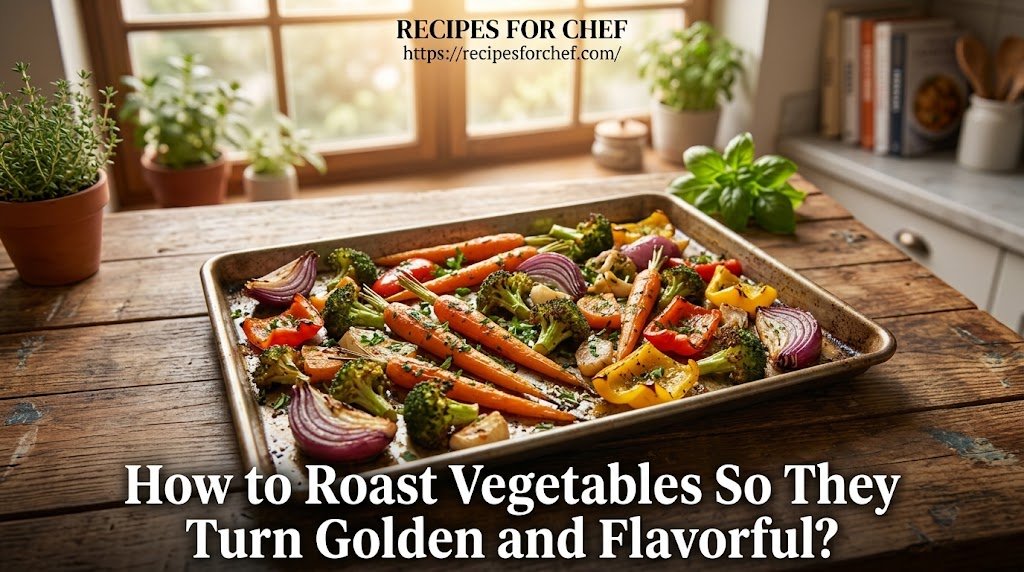
Roasted vegetables can be one of the easiest ways to turn ordinary produce into a satisfying side dish. The difference between vegetables that are deeply golden and flavorful and vegetables that are soft, pale, and watery usually comes down to a few simple details: moisture, oven temperature, cutting size, oil, seasoning, and space on the baking sheet.
The goal is not simply to cook the vegetables until they are soft. Good roasting creates contrast. The edges should become browned and slightly crisp while the centres remain tender. Some vegetables need longer cooking than others, so cutting everything into identical pieces is not always the best approach.
This guide explains how to roast a mixed tray of vegetables, how to avoid steaming, when to add delicate ingredients, and how to adjust the method for different vegetables.
Recipe Overview
Preparation time: 15 minutes
Roasting time: 25–40 minutes
Total time: About 40–55 minutes
Servings: 4–6
The exact roasting time depends on the vegetables you choose and how large you cut them.
What You Need
For a versatile mixed vegetable tray:
- 2 medium carrots
- 2 medium potatoes
- 1 medium red bell pepper
- 1 medium zucchini
- 1 small red onion
- 200 g broccoli florets
- 3 tablespoons olive oil
- 1 teaspoon kosher salt, or to taste
- ½ teaspoon black pepper
- 1 teaspoon dried oregano
- ½ teaspoon garlic powder
- ½ teaspoon paprika
For finishing:
- 1 tablespoon chopped fresh parsley, optional
- 1–2 teaspoons fresh lemon juice, optional
- A small amount of grated Parmesan, optional
You do not have to use every vegetable listed. The method can be adapted to whatever is available, but vegetables with different cooking times should not necessarily be treated exactly the same way.
Choose Vegetables With Similar Cooking Needs
One of the easiest mistakes is putting everything on one tray at the same time simply because it is convenient.
Potatoes and carrots are dense and need more time.
Zucchini and bell peppers contain more water and soften faster.
Broccoli sits somewhere between the two, depending on the size of the florets.
This means a mixed tray may work better when the dense vegetables start roasting first and the quicker-cooking vegetables are added later.
That small adjustment can give you tender potatoes without turning the zucchini into mush.
Prepare the Vegetables
Preheat the oven to 425°F (220°C).
Wash and dry the vegetables thoroughly.
Peel the carrots if desired and cut them into pieces roughly similar in size to the potato pieces.
Cut the potatoes into chunks around 1 inch across.
Slice the bell pepper into broad pieces rather than tiny strips.
Cut the zucchini into thick half-moons.
Cut the red onion into wedges, keeping some of the layers together.
Separate the broccoli into medium-sized florets.
The pieces do not need to look identical. What matters is that vegetables with similar densities are cut into sizes that allow them to finish at roughly the same time.
[Image suggestion: Prepared vegetables cut into different sizes according to their cooking times]
Why Dry Vegetables Matter
Water is one of the biggest obstacles to good browning.
When wet vegetables enter a hot oven, some of the heat is used to evaporate surface moisture. If there is a lot of moisture, the vegetables can become soft before they have enough time to develop strong browning.
After washing, dry the vegetables well with a clean kitchen towel or paper towels.
This is particularly helpful for potatoes, broccoli, and other vegetables with uneven surfaces where water can collect.
Use Enough Oil, But Not Too Much
Place the prepared vegetables in a large bowl.
For the first batch, combine the potatoes, carrots, and red onion with about two tablespoons of olive oil.
Add some of the salt, pepper, oregano, garlic powder, and paprika.
Toss thoroughly so the vegetables have a thin, even coating.
You are not trying to soak the vegetables in oil. Too much oil can make the finished dish greasy and may prevent some surfaces from browning cleanly.
The oil should lightly coat the vegetables rather than pool at the bottom of the bowl.
Give the Vegetables Room
Spread the potatoes, carrots, and onion across a large baking sheet.
Try to keep them in a single layer.
Avoid piling the pieces on top of each other.
This is one of the most important parts of the method.
When vegetables are packed tightly together, the moisture they release becomes trapped around them. Instead of roasting and browning, they can steam.
If your baking sheet is too small, use two sheets.
A slightly less crowded tray usually produces better browning than a heavily loaded tray.
[Image suggestion: Vegetables spread in a single layer with visible space between the pieces]
Roast the Dense Vegetables First
Place the baking sheet in the preheated oven.
Roast the potatoes, carrots, and onion for about 15–20 minutes.
At this stage, the vegetables should have started to soften and develop some colour around their edges.
While they roast, toss the zucchini, bell pepper, and broccoli with the remaining olive oil and seasoning.
After the first 15–20 minutes, carefully remove the tray and turn the vegetables with a spatula or tongs.
Then add the quicker-cooking vegetables.
Return the tray to the oven.
Continue roasting for another 15–20 minutes, or until the vegetables are tender and have developed the amount of browning you prefer.
The exact timing will vary. Check the vegetables rather than treating the clock as an absolute rule.
What Properly Roasted Vegetables Look Like
The potatoes should be tender when pierced with a fork, with browned edges.
Carrots should be tender but not falling apart.
Broccoli should have browned tips while retaining some structure.
Bell peppers should be softened with some darker edges.
Zucchini should be tender but still hold its shape.
The colour should be varied. You are looking for golden-brown and caramelized-looking areas rather than every surface being uniformly dark.
[Image suggestion: Finished roasted vegetables showing browned edges and tender centres]
Why High Heat Helps
Roasting at a relatively high temperature encourages surface browning while the vegetables cook through.
A lower oven temperature can still cook vegetables, but it may take longer to produce the browned edges you are looking for.
At the same time, very high heat is not automatically better. Delicate vegetables can burn before becoming tender, particularly if they are cut small.
The 425°F (220°C) temperature used here is a practical starting point for a mixed vegetable tray.
Your oven may run hotter or cooler than its display suggests, so visual cues remain important.
When Should You Turn the Vegetables?
You do not need to turn every individual piece.
For most vegetables, turning them once during roasting is enough.
The purpose is to expose another surface to the hot baking sheet and redistribute the pieces.
If the vegetables are already browning well, excessive stirring can actually make the process less efficient because every time you open the oven, heat escapes.
Use a wide spatula to turn several pieces at once.
Don’t Overcrowd the Baking Sheet
If you remember only one rule from this guide, make it this one.
Give the vegetables space.
A crowded baking sheet creates a humid environment. Vegetables release water as they cook, and when that moisture has nowhere to escape, browning becomes more difficult.
A large sheet pan with vegetables spread apart can produce noticeably better results than a smaller pan loaded to the edges.
If you have a lot of vegetables, roast them in batches or use two baking sheets.
If using two trays at the same time, rotate their positions during cooking if your oven has noticeable hot spots.
Common Mistakes and How to Avoid Them
Cutting Everything the Same Size
Uniform pieces look neat, but different vegetables cook at different speeds.
Dense vegetables usually need smaller pieces or an earlier start.
Quick-cooking vegetables can be left slightly larger.
Putting Wet Vegetables in the Oven
Excess moisture slows browning.
Dry vegetables thoroughly before adding oil.
Using Too Much Oil
Vegetables need enough oil for even coating, but they should not be swimming in it.
Start with a moderate amount and add only what is needed.
Overcrowding the Pan
This is one of the main reasons roasted vegetables come out soft rather than golden.
Use more surface area.
Using Too Little Heat
A cool oven can cook the vegetables slowly without producing the browned surfaces you want.
Make sure the oven is fully preheated.
Chopping Vegetables Too Small
Tiny pieces can burn before their centres become tender.
Cut vegetables according to how quickly they cook.
Adding Fresh Garlic Too Early
Finely chopped fresh garlic can burn during a long roast.
If you want fresh garlic flavour, add minced garlic during the final few minutes or use larger garlic pieces that can withstand longer cooking.
How to Make the Vegetables More Flavorful
Good roasting already concentrates the natural flavour of vegetables, but a few finishing ingredients can make the tray more interesting.
Fresh Lemon
A small amount of lemon juice added after roasting can brighten vegetables that taste rich from the oil and browning.
Add it at the end rather than before roasting if you want a clean, fresh flavour.
Fresh Herbs
Parsley, basil, thyme, or rosemary can be added according to the vegetables you are using.
Delicate herbs are generally better added after roasting.
Parmesan
A small amount of grated Parmesan works particularly well with roasted broccoli, potatoes, and carrots.
Sprinkle it over the hot vegetables after they come out of the oven.
Balsamic Vinegar
A small drizzle of balsamic vinegar can add acidity and sweetness.
Use it sparingly. Too much can overpower the roasted flavours.
How to Roast Different Vegetables
Potatoes
Potatoes benefit from high heat and enough space.
Cut them into medium chunks and dry them well before oiling.
They may need 30–40 minutes depending on their size.
Carrots
Carrots become sweeter and more deeply flavoured as their edges brown.
Cut thick carrots into manageable pieces so the outside does not burn before the centre softens.
Broccoli
Broccoli florets develop excellent browned tips in a hot oven.
Keep the florets reasonably large and avoid drowning them in oil.
You can roast the stems too. Peel thick stems if needed and cut them into smaller pieces.
Zucchini
Zucchini contains considerable moisture and cooks quickly.
Use thicker pieces and avoid overcrowding the tray.
It may need only 15–25 minutes depending on size.
Bell Peppers
Bell peppers soften relatively quickly and develop sweet, browned edges.
They can be added partway through the roasting process rather than at the beginning.
Cauliflower
Cauliflower works particularly well at high heat.
Medium florets can roast until their edges are deeply browned while the centre remains tender.
Brussels Sprouts
Halve Brussels sprouts so the cut side has direct contact with the pan.
Place them cut-side down for strong browning.
Should You Use Parchment Paper?
Parchment paper makes cleanup easier and can help prevent sticking.
However, direct contact between the vegetables and a suitable metal baking sheet can encourage strong browning.
If you use parchment, follow the temperature limits specified by the manufacturer.
For maximum browning, a clean, sturdy metal baking sheet can work very well.
Can You Roast Frozen Vegetables?
Yes, although the result can be different from roasting fresh vegetables.
Frozen vegetables often contain more surface moisture, which can make browning more difficult.
Do not thaw them unless the specific product instructions recommend it. Instead, use a hot oven and avoid crowding the tray.
You may need additional roasting time.
For very watery frozen vegetables, roasting them separately can make it easier to control the final texture.
How to Prevent Vegetables From Burning
If the edges are becoming very dark while the centres remain firm, the pieces may be too large for the available cooking time, the oven may be running hot, or the pan may be positioned too close to the heating element.
Turn the vegetables and reduce the oven temperature slightly if necessary.
You can also move the baking sheet to a different oven rack.
Do not simply add more oil to burned vegetables. Oil will not solve an oven-temperature or cutting-size problem.
How to Get Extra-Crisp Potatoes
Potatoes benefit from a few additional steps.
After cutting them, rinse or soak them briefly if desired, then dry them extremely well before seasoning.
Do not skip the drying stage.
Spread the potatoes out with their cut surfaces touching the pan where possible.
Avoid turning them too early. Allowing the first side to remain in contact with the hot tray gives it time to brown.
For a mixed vegetable tray, you may prefer to roast potatoes separately so they can receive the full amount of cooking time they need.
Serving Suggestions
Roasted vegetables are flexible enough to accompany almost any simple main course.
Serve them alongside roasted chicken, grilled steak, pan-seared fish, or baked salmon.
They can also become part of the main meal.
Add them to cooked rice, couscous, quinoa, pasta, or warm grains.
For lunch, place the roasted vegetables over greens and add a simple dressing.
You can also tuck the vegetables into wraps or sandwiches with hummus, cheese, or another suitable spread.
Leftover roasted vegetables are especially useful in omelettes, frittatas, grain bowls, and pasta dishes.
[Image suggestion: Golden roasted vegetables served alongside grilled chicken and a simple salad]
Storage and Reheating
Allow leftover vegetables to cool appropriately before transferring them to a covered container.
Refrigerate them promptly.
For best texture, reheat them in an oven, toaster oven, or air fryer rather than the microwave. The dry heat helps restore some of the roasted exterior.
A microwave is convenient when speed matters, but the vegetables will generally become softer.
When reheating in the oven, spread the vegetables out rather than piling them into a deep dish.
Frequently Asked Questions
Why are my roasted vegetables not turning golden?
The most common reasons are excess moisture, too little oven heat, too much crowding, or insufficient cooking time. Dry the vegetables well and spread them out so hot air can circulate around them.
Should I cover vegetables when roasting?
Generally, no. Covering traps steam and works against the dry heat needed for browning. Leave the vegetables uncovered unless a specific recipe calls for otherwise.
What temperature is best for roasting vegetables?
A range around 400–450°F (205–230°C) works well for many vegetables. 425°F (220°C) is a useful starting point for a mixed tray.
Should vegetables be turned while roasting?
Usually, turning them once is enough. The main purpose is to expose another surface to the hot baking sheet and promote more even browning.
Can I roast different vegetables together?
Yes, but consider their cooking times. Dense vegetables such as potatoes and carrots may need to start earlier, while zucchini and bell peppers can be added later.
Why are my roasted vegetables soggy?
They may have been overcrowded, too wet, or coated with excessive oil. Use a larger baking sheet, dry the vegetables thoroughly, and roast them in a single layer.
Can I prepare roasted vegetables ahead of time?
Yes. You can cut and season many vegetables ahead, although particularly watery vegetables such as zucchini are often better prepared closer to roasting. Cooked vegetables can be refrigerated and reheated later.
Final Thoughts
Golden roasted vegetables come from controlling moisture, heat, and space rather than relying on complicated seasoning.
Dry the vegetables well, use enough oil to coat them lightly, choose the right size for each vegetable, and keep enough space between the pieces. For a mixed tray, give dense vegetables a head start and add quicker-cooking vegetables later.
Once the tray comes out of the oven, taste before serving. A little fresh lemon, chopped herbs, or Parmesan can add a useful finishing touch, but well-browned vegetables should already have plenty of flavour from the roasting process itself.
2 thoughts on “How to Roast Vegetables So They Turn Golden and Flavorful?”