
Vanilla cupcakes are simple on paper, but getting them soft, moist, and evenly baked takes a little more care than simply mixing ingredients and putting the pan in the oven. Small details such as butter temperature, flour measurement, mixing time, and cooling can make a noticeable difference.
This recipe uses familiar ingredients and a straightforward mixing method. The goal is a cupcake with a tender crumb, a light vanilla flavor, and enough moisture to stay enjoyable after cooling. You do not need special baking skills or unusual ingredients.
The instructions below explain not only what to do, but also what the batter should look like, when to stop mixing, how to check for doneness, and what to do if your cupcakes sink, turn dry, or bake unevenly.
[IMAGE SUGGESTION: A close-up photograph of freshly baked golden vanilla cupcakes arranged on a cooling rack, showing their soft crumb and lightly domed tops.]
Why This Recipe Works
A good vanilla cupcake depends on a few basic baking principles working together.
Butter contributes flavor and helps create a tender texture. Sugar sweetens the cupcakes while also helping retain moisture. Eggs provide structure and richness, while milk loosens the batter so the finished crumb is soft rather than dense.
The flour provides the structure needed to hold the cupcakes together. Too much flour can make them heavy and dry, which is why accurate measuring matters. Baking powder provides lift, helping the cupcakes rise in the oven.
Vanilla extract gives the cupcakes their familiar flavor. A small amount of salt is also important because it keeps the sweetness from tasting flat.
One of the most important techniques is avoiding overmixing after the flour is added. Once flour comes into contact with liquid, gluten begins developing. A little structure is useful, but excessive mixing can produce cupcakes that are noticeably firmer and less tender.
Ingredients You’ll Need
This recipe makes approximately 12 standard cupcakes.
- 1 ½ cups (180 g) all-purpose flour: Provides the main structure.
- 1 ½ teaspoons baking powder: Helps the cupcakes rise.
- ¼ teaspoon salt: Balances the sweetness and improves flavor.
- ½ cup (113 g) unsalted butter, softened: Adds richness and helps create a tender crumb.
- ¾ cup (150 g) granulated sugar: Sweetens the cupcakes and contributes to their soft texture.
- 2 large eggs, room temperature: Provide structure and richness.
- 2 teaspoons pure vanilla extract: Gives the cupcakes their main flavor.
- ½ cup (120 ml) whole milk, room temperature: Adds moisture and creates a smooth batter.
For the most consistent result, weigh the flour with a kitchen scale. If you are measuring with cups, spoon the flour into the measuring cup and level the top rather than scooping directly from a packed flour container.
Room-temperature butter should feel soft when pressed with a finger but should not look oily or melted. If the butter is very hard, it will not cream properly with the sugar. If it is melted, the texture of the cupcakes can change.
Equipment
You will need a standard 12-cup muffin pan, 12 paper cupcake liners, two mixing bowls, a hand mixer or stand mixer, a whisk, a rubber spatula, measuring spoons, and a wire cooling rack.
A kitchen scale is strongly recommended for the flour and sugar, especially if you bake often. An oven thermometer is also useful because the temperature shown on an oven dial or display is not always the exact temperature inside the oven.
You can mix the batter by hand, but an electric mixer makes it easier to properly cream the butter and sugar.
How to Make Soft, Moist Vanilla Cupcakes
Step 1: Prepare the Oven and Pan
Preheat your oven to 350°F (175°C). Position a rack in the center of the oven.
Line a 12-cup muffin pan with paper liners. There is normally no need to grease the pan when using paper liners.
Allow the oven to fully preheat before putting the cupcakes inside. Starting in an oven that is still warming can affect how the batter rises and may produce uneven results.
[IMAGE SUGGESTION: A lined 12-cup muffin pan sitting beside a fully preheated oven.]
Step 2: Mix the Dry Ingredients
Add the flour, baking powder, and salt to a medium bowl. Whisk them together for about 20–30 seconds.
This distributes the baking powder and salt throughout the flour so you do not end up with concentrated pockets of either ingredient.
Set the bowl aside.
Step 3: Cream the Butter and Sugar
Place the softened butter and sugar in a large mixing bowl. Beat on medium speed for approximately 2–3 minutes, or until the mixture looks lighter in color and fluffy.
Do not worry if the mixture does not become completely white. What you want is a noticeably lighter, creamy mixture with no large lumps of butter.
This step helps incorporate air into the mixture. Those small air pockets can contribute to a lighter cupcake.
If your butter is too cold, the mixture may remain chunky. If it is almost melted, it can become greasy rather than fluffy.
[IMAGE SUGGESTION: Close-up photograph of creamed butter and sugar showing a pale, fluffy consistency.]
Step 4: Add the Eggs and Vanilla
Add the eggs one at a time, beating after each addition until incorporated.
Scrape down the sides and bottom of the bowl with a spatula if necessary. Add the vanilla extract and mix briefly.
If the mixture looks slightly curdled after adding the eggs, do not panic. This can happen when the eggs are colder than the butter. Once the flour is added, the batter can still come together normally.
Avoid beating the mixture for a long time at this stage. Once the eggs and vanilla are incorporated, move on.
Step 5: Add the Flour and Milk
Add about one-third of the dry ingredients to the butter mixture. Mix on low speed just until mostly incorporated.
Add half of the milk and mix briefly. Continue alternating the remaining dry ingredients and milk, finishing with the dry ingredients.
Mix only until you no longer see obvious streaks of dry flour. A few small lumps are preferable to excessive mixing.
The finished batter should be thick but easily spoonable. It should fall from a spoon without being runny.
This is one of the points where many homemade cupcakes go wrong. Mixing until the batter looks perfectly smooth can actually mean you have mixed too much.
Step 6: Fill the Cupcake Liners
Divide the batter evenly between the 12 liners.
Aim to fill each liner approximately two-thirds full. An ice cream scoop can make portioning easier and helps keep the cupcakes similar in size.
Try not to leave one liner almost full while another has only a small amount of batter. Uneven portions will finish baking at different times.
If you have a little batter left over, do not force it into the existing cups. An overfilled liner can cause the batter to spill over the sides as it rises.
Step 7: Bake
Place the pan on the center oven rack and bake for approximately 18–22 minutes.
Avoid opening the oven repeatedly during the first part of baking. A sudden drop in temperature can interfere with the cupcakes’ rise.
Start checking around the 18-minute mark because ovens vary.
The cupcakes should look set on top and lightly golden around the edges. A toothpick inserted into the center of one cupcake should come out clean or with a few moist crumbs attached.
If the toothpick has wet batter on it, continue baking for another minute or two and check again.
[IMAGE SUGGESTION: Cupcakes inside the oven on the center rack, with lightly golden tops beginning to dome.]
Step 8: Cool Properly
Remove the pan from the oven and let the cupcakes sit in the pan for about 5 minutes.
Then transfer them to a wire rack to cool completely.
Do not frost hot cupcakes. Heat can melt buttercream or other frostings and cause them to slide off the tops.
The cupcakes may feel slightly soft when they first come out of the oven. Their crumb becomes more stable as they cool.
Chef Tips for Better Results
Measure flour carefully. Too much flour is one of the easiest ways to end up with dry cupcakes. A scale gives you the most consistent measurement.
Use room-temperature ingredients. Eggs and milk that are close to room temperature combine more easily with softened butter. This helps create a smoother batter.
Do not melt the butter. Softened butter and melted butter behave differently in a cake batter. For this recipe, the butter should be soft enough to beat but still hold its shape.
Mix gently after adding flour. Once the dry ingredients enter the bowl, use low speed and stop as soon as the flour disappears.
Check your oven temperature. If cupcakes repeatedly brown too quickly while remaining undercooked inside, your oven may be running hotter than its setting suggests.
Bake one pan at a time when possible. If your oven has uneven heat, placing several pans inside can make consistent baking more difficult.
Cool before decorating. Even a good cupcake can become messy if frosting is added while the cake is still warm.
[IMAGE SUGGESTION: A finished cupcake being gently sliced in half to reveal a soft, even crumb.]
Common Mistakes to Avoid
Using Too Much Flour
Packing flour into a measuring cup can add considerably more flour than intended. The result is usually a thicker batter and a drier cupcake.
Use a kitchen scale when possible. Otherwise, spoon flour into the measuring cup and level it with a straight edge.
Overmixing the Batter
Overmixing after adding flour can develop too much gluten. The cupcakes may rise but have a firmer, chewier texture instead of a soft crumb.
Mix only until the ingredients are combined.
Using Melted Butter
Melted butter does not behave the same way as softened butter during creaming. You may lose some of the structure created during the butter-and-sugar mixing stage.
Let melted butter cool and solidify before using it for this recipe.
Opening the Oven Too Often
Checking the cupcakes every few minutes can cause temperature changes inside the oven. Wait until close to the expected baking time before checking.
Overfilling the Liners
Too much batter can cause large, uneven domes or spillovers. Keeping the liners around two-thirds full gives the batter room to rise.
Frosting Warm Cupcakes
Warm cupcakes can soften or melt frosting. Allow them to cool completely before decorating.
Easy Substitutions and Variations
Milk
Whole milk gives the cupcakes a rich, tender texture. You can use 2% milk, although the finished cupcakes may be slightly less rich.
Plant-based milk can also work if it is unsweetened and relatively similar in consistency to dairy milk. The flavor may change depending on the variety.
Vanilla Extract
Pure vanilla extract gives a clear vanilla flavor, but vanilla bean paste can be used in a similar quantity if you want visible vanilla specks and a stronger vanilla character.
Avoid adding large amounts of vanilla simply to make the flavor stronger. Too much liquid flavoring can alter the batter slightly.
Lemon-Vanilla Cupcakes
Add about 1 teaspoon of finely grated lemon zest to the butter and sugar mixture. The citrus adds brightness without requiring a major change to the recipe.
Chocolate Chip Vanilla Cupcakes
Fold a small amount of mini chocolate chips into the finished batter. Use a light hand so the added chocolate does not make the cupcakes excessively heavy.
Simple Vanilla Frosting
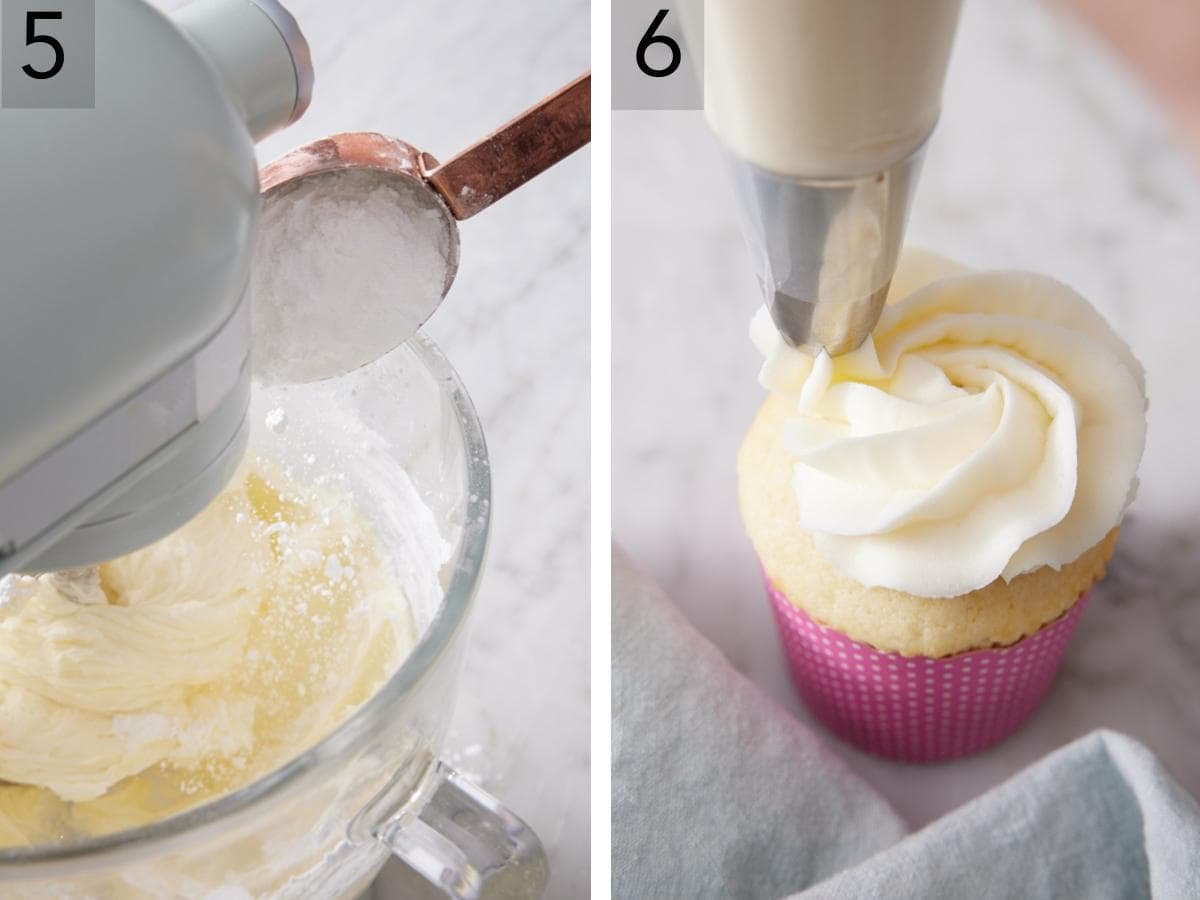
Once the cupcakes are completely cool, top them with your favorite vanilla buttercream. Keep the frosting layer moderate so the delicate cupcake remains the main part of each serving.
How to Know When It’s Done
The baking time is useful, but it should not be the only test.
Look at the tops first. Properly baked cupcakes should have a set surface and usually a light golden color around the edges.
Gently press the center with a fingertip. It should spring back rather than remain deeply indented.
The most reliable simple test is a toothpick inserted into the center. It should come out clean or with a few moist crumbs. Wet batter means the cupcakes need more time.
If you have an instant-read thermometer and want a more technical check, the center of a fully baked cake is generally around 200–210°F (93–99°C), although visual and texture checks remain practical for home baking.
Do not keep baking simply until the cupcakes become deeply browned. Overbaking is a common cause of dry vanilla cupcakes.
Storage and Serving
Let the cupcakes cool completely before storing them.
Unfrosted cupcakes can be kept in an airtight container at room temperature for about 2 days in a cool, dry environment. Frosted cupcakes can also generally be kept covered at room temperature when the frosting and other toppings are suitable for room-temperature storage.
If your frosting contains ingredients that require refrigeration, follow the storage requirements for those ingredients.
For longer storage, unfrosted cupcakes can be frozen in an airtight container or freezer-safe bag for about 2–3 months. Wrap them well to protect against freezer odors and moisture loss.
Thaw frozen cupcakes at room temperature while still covered. Frost them after they have completely thawed.
Serve the cupcakes at room temperature for the softest texture and fullest vanilla flavor.
Troubleshooting
Why did my vanilla cupcakes sink in the middle?
A sunken center can happen when the cupcakes are underbaked, the oven temperature is inaccurate, or the batter has been overmixed or disturbed before the structure has set.
Check your oven temperature and make sure the cupcakes are fully baked before removing them. Avoid opening the oven early.
Why are my cupcakes dry?
Too much flour and overbaking are the most common causes. Measuring flour by weight helps prevent excess flour, while checking the cupcakes near the earliest suggested baking time helps prevent unnecessary baking.
Why are my cupcakes dense?
Dense cupcakes can result from overmixing, inaccurate measurements, very cold ingredients, or an issue with the baking powder.
Use fresh baking powder, bring refrigerated ingredients closer to room temperature, and mix the batter only until combined.
Why did my cupcakes overflow?
The liners were probably filled too high, or the batter received more leavening than intended. Keep the liners around two-thirds full and measure baking powder accurately.
Why are my cupcakes uneven in size?
Uneven portioning causes different amounts of batter to bake at different rates. Use a cookie scoop or ice cream scoop to divide the batter evenly among the liners.
Why are the tops very dark but the centers are not done?
The oven may be running too hot, or the pan may be positioned too close to a strong heating element. Use the center rack and consider checking the oven temperature with an oven thermometer.
Recipe Card
Recipe Name: Soft, Moist Vanilla Cupcakes From Scratch
Prep Time: 15 minutes
Bake Time: 18–22 minutes
Total Time: About 40 minutes, plus cooling
Servings: 12 cupcakes
Ingredients
- 1 ½ cups (180 g) all-purpose flour
- 1 ½ teaspoons baking powder
- ¼ teaspoon salt
- ½ cup (113 g) unsalted butter, softened
- ¾ cup (150 g) granulated sugar
- 2 large eggs, room temperature
- 2 teaspoons pure vanilla extract
- ½ cup (120 ml) whole milk, room temperature
Instructions
- Preheat the oven to 350°F (175°C) and line a 12-cup muffin pan with paper liners.
- Whisk together the flour, baking powder, and salt.
- Beat the softened butter and sugar for about 2–3 minutes until lighter and fluffy.
- Add the eggs one at a time, mixing after each addition. Add the vanilla.
- Add the dry ingredients and milk alternately, beginning and ending with the dry ingredients. Mix only until combined.
- Divide the batter evenly between the 12 liners, filling each about two-thirds full.
- Bake for approximately 18–22 minutes, checking with a toothpick near the end of the baking time.
- Cool in the pan for 5 minutes, then transfer to a wire rack and cool completely before frosting.
Notes
For the softest texture, avoid overmixing once the flour is added. Weighing the flour is also recommended because small differences in flour quantity can noticeably affect cupcake texture.
Frequently Asked Questions
Can I make vanilla cupcakes without a stand mixer?
Yes. A hand mixer works well, and you can also mix the batter by hand with a sturdy whisk and spatula. The important part is properly combining the softened butter and sugar and then avoiding excessive mixing after the flour is added.
Should eggs and milk be at room temperature?
Room-temperature eggs and milk generally combine more smoothly with the softened butter. This helps the batter come together evenly and reduces the chance of a lumpy mixture.
How do I keep vanilla cupcakes moist?
Accurate flour measurement, avoiding overbaking, and storing the cooled cupcakes in an airtight container are the main things to focus on. Do not add extra milk simply to make the cupcakes more moist because changing the liquid balance can affect the structure.
Can I freeze homemade vanilla cupcakes?
Yes. Cool the cupcakes completely, wrap them well, and place them in an airtight freezer-safe container or bag. They can generally be frozen for about 2–3 months. Thaw them while covered at room temperature before decorating.
Why did my cupcakes come out flat?
Flat cupcakes can result from expired baking powder, an oven that is not properly preheated, under-creaming the butter and sugar, or batter that was mixed incorrectly. Check your leavening ingredients and make sure the oven reaches temperature before baking.
Can I use salted butter instead of unsalted butter?
Yes. If using salted butter, reduce or omit the additional salt in the recipe. Because the amount of salt varies between butter brands, the final flavor may be slightly different.
When should I frost vanilla cupcakes?
Wait until the cupcakes have cooled completely. Frosting a warm cupcake can cause buttercream or other frostings to soften and slide. A completely cool cupcake also provides a cleaner surface for piping or spreading.
Conclusion
Soft vanilla cupcakes do not require complicated techniques. The important details are surprisingly simple: measure the flour accurately, use softened rather than melted butter, mix the batter gently after adding the flour, and avoid overbaking.
Pay attention to the batter as you work. It should be thick and smooth enough to scoop, while the baked cupcakes should have set tops and a soft crumb with a few moist crumbs left on a toothpick.
Once you are comfortable with this basic vanilla cupcake method, it becomes an easy foundation for different frostings, fillings, and flavor variations. The same careful approach to measuring, mixing, baking, and cooling will also improve many other cakes and baked desserts.