
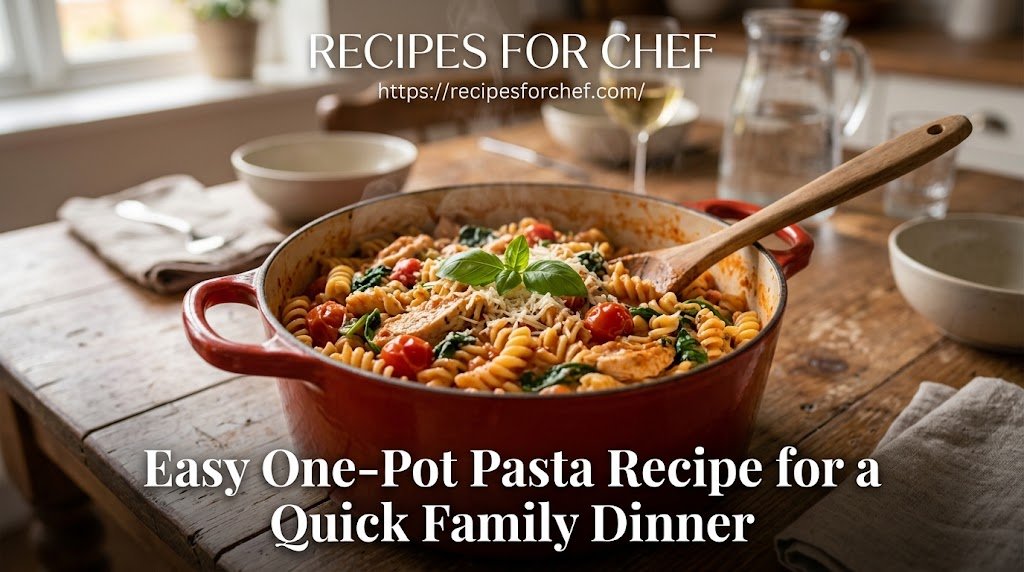
When dinner needs to be simple, pasta is often one of the easiest places to start. The problem with many pasta meals is that they still leave you with a pot for boiling pasta, a pan for making sauce, and another dish or two waiting in the sink.
This one-pot pasta takes a different approach. The pasta cooks directly in a savory tomato sauce with onion, garlic, Italian herbs, and broth. Everything happens in one large pot, and the cooking liquid becomes part of the sauce as the pasta releases starch.
The result is a practical family dinner with tender pasta and a lightly creamy, clingy tomato sauce. You do not need a separate saucepan, and there is no need to drain a pot of pasta water at the end.
The most important part of this recipe is knowing what to watch for while the pasta cooks. Because the noodles are cooking directly in the sauce, the heat, stirring, and amount of liquid all affect the final texture.
Recipe Overview
This recipe is designed for a busy evening when you want something warm and satisfying without complicated preparation.
The sauce starts with onion and garlic cooked in olive oil. Crushed tomatoes, broth, and herbs provide the cooking liquid. Dried pasta goes directly into the pot and simmers until tender. A little Parmesan at the end adds savory flavor and helps the sauce become thicker.
Preparation time: 10 minutes
Cooking time: 20–25 minutes
Total time: About 30–35 minutes
Servings: 4–5
Ingredients
- 12 ounces (340 g) dried pasta, such as penne, rotini, fusilli, or spaghetti
- 1 tablespoon olive oil
- 1 medium yellow onion, finely diced
- 3 garlic cloves, minced
- 1 can (14–15 ounces / 400–425 g) crushed tomatoes
- 3 cups low-sodium chicken or vegetable broth
- 1 teaspoon dried Italian seasoning
- ½ teaspoon dried oregano
- ½ teaspoon salt, plus more if needed
- ¼ teaspoon black pepper
- ½ teaspoon red pepper flakes, optional
- ½ cup finely grated Parmesan cheese
- 1 tablespoon chopped fresh parsley or basil, optional
For a richer finish, you can stir in 2 tablespoons of cream at the end. It is not necessary, though. The starch released from the pasta already helps give the sauce body.
Equipment
You only need a few basic pieces of equipment:
- One large, heavy-bottomed pot or Dutch oven
- Wooden spoon or heat-resistant spatula
- Measuring cups and spoons
- Knife and cutting board
- Ladle or spoon for serving
A wide pot is particularly useful because it gives the pasta more room to sit in the cooking liquid. If your pot is narrow, you may need to stir more often to keep the noodles from sticking together.
Choosing the Right Pasta
Not every pasta shape behaves exactly the same way in a one-pot recipe.
Short shapes such as penne, rotini, and fusilli are especially convenient because they are easy to stir and hold onto the sauce. Spaghetti can also work, but you may need to break the strands in half so they fit comfortably into the pot.
Thicker pasta or unusual shapes may require a different amount of liquid or cooking time. If you substitute the pasta, pay more attention to the texture than the clock.
The pasta should be tender but still have some firmness when you bite into it. If it becomes soft and mushy, it has gone too far.
Why Cooking Pasta Directly in the Sauce Works
Traditional pasta cooking usually involves boiling noodles in plenty of water and making the sauce separately.
Here, the pasta cooks in a smaller amount of liquid. As the noodles simmer, they release starch into the broth and tomato mixture. That starch helps the sauce thicken and cling to the pasta.
This is also why the liquid amount matters.
If you add far too much broth, the finished dish can become watery. If you use too little, the pasta may remain hard before there is enough liquid left to finish cooking it.
Stirring matters for another reason. Pasta sitting against the bottom of a hot pot can stick, especially as the liquid reduces. Regular stirring keeps the pieces separated and helps distribute the cooking liquid.
Prepare the Ingredients First
Dice the onion fairly small so it softens quickly.
Mince the garlic, but do not leave it sitting in a very hot pan for too long before adding the tomatoes. Finely chopped garlic can burn quickly, and burnt garlic has a bitter flavor that can dominate a simple sauce.
Measure the broth and crushed tomatoes before you start cooking. Once the onions are ready, the rest of the recipe moves fairly quickly.
If you are adding Parmesan, grate it before the pasta finishes. Freshly grated cheese generally melts more smoothly into the hot pasta than larger packaged pieces.
Step-by-Step Method
1. Cook the onion
Place a large pot over medium heat and add the olive oil.
Add the diced onion and cook for about 3–4 minutes, stirring occasionally.
You are not trying to brown the onion heavily. Look for it to become softer and slightly translucent.
If the onion starts browning very quickly, lower the heat. The goal is to build a mild savory base without burning it.
2. Add the garlic and seasonings
Add the minced garlic, Italian seasoning, oregano, black pepper, and red pepper flakes if using.
Cook for about 30 seconds, stirring constantly.
You should smell the garlic and herbs as they warm. Do not let the garlic turn dark brown.
3. Add the tomatoes and broth
Pour in the crushed tomatoes and broth.
Add the salt and stir well, scraping the bottom of the pot to loosen any onion or garlic that may have stuck.
Bring the mixture to a gentle simmer.
You do not need a violent boil. A steady simmer is easier to control and gives the pasta time to absorb liquid without causing the sauce to reduce too quickly.
4. Add the dried pasta
Add the dried pasta directly to the pot.
If you are using spaghetti, gently press the strands down as they soften. Do not force dry strands into the pot if they are likely to break against the bottom.
Stir thoroughly so the pasta is coated with the tomato mixture.
At first, the liquid may seem plentiful. As the pasta cooks, it will absorb some of that liquid while releasing starch back into the sauce.
5. Simmer and stir
Reduce the heat to medium-low and cook according to the pasta’s package timing, usually around 9–12 minutes, stirring every couple of minutes.
Keep an eye on the bottom of the pot.
If the sauce becomes very thick while the pasta is still firm, add a small amount of hot water or broth, about ¼ cup at a time. Stir and continue cooking.
If the pasta is almost done but the sauce looks thinner than you want, leave the lid off and continue cooking for another minute or two while stirring.
The exact timing will depend on the pasta shape, pot, heat level, and starting temperature of the liquid.
6. Check the pasta before adding cheese
Taste a piece of pasta shortly before the package cooking time ends.
It should be tender enough to chew comfortably but still have some structure. If the center is noticeably hard, continue cooking for another minute or two.
The sauce should coat the pasta rather than run like a thin soup.
This is the point where you should adjust the consistency. If it is too thick, add a splash of broth or hot water. If it is too loose, continue simmering uncovered.
7. Finish with Parmesan
Turn off the heat.
Add the grated Parmesan and stir until it melts into the sauce.
The cheese adds salt and savory depth while also making the sauce feel thicker. Taste before adding more salt because Parmesan can be quite salty.
If using fresh basil or parsley, stir it in just before serving.
Let the pasta sit for about 2 minutes before serving. The sauce will continue to thicken slightly as it cools.
How the Finished Pasta Should Look
The finished pasta should not be swimming in tomato liquid.
Instead, the sauce should cling to the noodles and collect lightly in the bottom of the pot. When you stir the pasta, it should move as a cohesive mixture rather than looking like noodles surrounded by watery sauce.
The pasta itself should be tender but not falling apart.
If the sauce seems slightly too loose immediately after cooking, give it a minute or two before changing anything. The starch and Parmesan continue to thicken the mixture as it rests.
Common Mistakes and How to Avoid Them
Adding all the liquid at once without checking the pasta
The listed amount is a starting point, but different pasta shapes absorb liquid differently.
Instead of blindly adding more liquid during cooking, wait and watch. Add small amounts only when necessary.
Cooking at too high a temperature
A strong boil can make the sauce reduce before the pasta has enough time to cook. It can also cause tomato sauce to splatter and stick to the bottom of the pot.
A gentle, steady simmer is easier to control.
Not stirring enough
One-pot pasta needs more attention than pasta cooked in a large pot of water.
Stir every couple of minutes, especially toward the end. The sauce becomes thicker as the pasta cooks, increasing the chance of sticking.
Using too much cheese
Parmesan is useful here, but adding a large amount can make the sauce excessively thick and salty.
Start with the recommended amount, stir it in, then taste.
Overcooking the pasta
There is less water surrounding the noodles than in traditional pasta cooking, so the texture can change quickly near the end.
Start tasting before the package time is complete. Once the pasta reaches the texture you want, turn off the heat.
Easy Substitutions
Pasta
Penne, rotini, fusilli, rigatoni, and spaghetti can all work. Smaller shapes may finish a little differently, so use the texture as your guide.
Broth
Vegetable broth works well for a meat-free version. Chicken broth gives the sauce a slightly deeper savory flavor.
If using regular-sodium broth, reduce the added salt at the beginning and adjust after cooking.
Parmesan
Pecorino Romano can be used instead, although it has a stronger and saltier flavor. Add it gradually.
For a dairy-free version, simply leave out the Parmesan. The pasta will still thicken the sauce through its released starch.
Vegetables
You can add vegetables, but timing matters.
Finely diced bell peppers can cook with the onion. Baby spinach can be stirred in during the final minute or two. Small zucchini pieces can be added during the latter part of cooking.
Avoid adding large amounts of vegetables without adjusting the liquid because vegetables release water and can change the sauce consistency.
Ways to Add Protein
For a more substantial family meal, you can add cooked chicken, shredded rotisserie chicken, cooked ground meat, or sliced sausage.
Using already-cooked protein is particularly convenient because it does not require changing the pasta’s cooking liquid or adding another cooking stage.
If you want to cook raw meat in the same pot, the method needs to be adjusted so the meat reaches a safe internal temperature before serving. It is usually simpler for a quick weeknight version to cook the protein separately or use leftovers.
How to Make the Dinner More Flavorful
A simple pasta dish benefits from finishing ingredients rather than adding many ingredients at the beginning.
A little fresh basil gives the tomato sauce a fresh herbal note. Lemon zest can brighten a rich version. A small amount of red pepper flakes adds heat without changing the basic recipe.
You can also drizzle a little extra-virgin olive oil over individual servings.
For children or family members who prefer mild food, leave the red pepper flakes out and let people add them to their own portions.
Storage and Reheating
Allow leftover pasta to cool appropriately and refrigerate it in a covered container.
For food safety, USDA guidance recommends refrigerating perishable cooked foods within 2 hours.
The sauce will become noticeably thicker in the refrigerator because the pasta continues to absorb moisture.
When reheating on the stove, place the pasta in a saucepan over low to medium-low heat and add a splash of water or broth. Stir frequently until hot.
For microwave reheating, add a small splash of water before covering the container loosely and heating in short intervals. Stir between intervals so the heat distributes more evenly.
Do not add a large amount of liquid at once. A little is usually enough to loosen the sauce.
Serving Suggestions
Serve the pasta with a simple green salad if you want something fresh alongside the warm dish.
Garlic bread or toasted bread also works well for scooping up the tomato sauce.
For a family dinner, you can put grated Parmesan, chopped herbs, and red pepper flakes on the table so everyone can adjust their serving.
If the meal needs extra vegetables, steamed broccoli or roasted green beans can be served alongside it without complicating the main recipe.
Frequently Asked Questions
Can I use spaghetti instead of short pasta?
Yes. Spaghetti works, although you may need to break the strands in half so they fit comfortably in the pot. Stir more frequently during the first few minutes as the strands soften and separate.
Why is my one-pot pasta watery?
There may be too much cooking liquid, or the pasta may not have released enough starch yet. Continue simmering uncovered for a few minutes while stirring. If the pasta is already tender, avoid cooking it for too long just to reduce the sauce. The Parmesan and a short resting period can also help thicken it.
Why did my pasta stick to the bottom?
The heat may be too high, the pot may not be heavy enough to distribute heat evenly, or the pasta may not have been stirred often enough. Keep the heat at a gentle simmer and stir regularly, especially toward the end.
Can I make this recipe creamy?
Yes. Stir in a small amount of heavy cream after the pasta is cooked and the heat has been turned down or off. You can also rely on Parmesan and pasta starch for a creamy-feeling sauce without adding cream.
Can I add chicken to this one-pot pasta?
Yes, but for a quick version, cooked chicken is easier. Stir shredded or chopped cooked chicken into the finished pasta and heat until hot. If using raw chicken, it must be cooked safely before serving, and the recipe’s timing and liquid would need to be adjusted.
Can I use fresh tomatoes instead of canned crushed tomatoes?
You can, but the result will be less predictable because fresh tomatoes vary greatly in water content. Canned crushed tomatoes provide a consistent amount of liquid and tomato flavor, which makes them convenient for a one-pot pasta.
How can I prevent leftovers from becoming too dry?
Store the pasta with its sauce and add a splash of water or broth when reheating. Warm it gently rather than cooking it at high heat for a long period.
Final Thoughts
One-pot pasta works best when you treat the cooking liquid as part of the sauce rather than simply as water for boiling noodles. Keep the heat moderate, stir regularly, and start checking the pasta before the package cooking time is finished.
The small amount of attention required near the end is worth it. You can take a few basic ingredients and turn them into a complete family dinner without filling the kitchen sink with cooking pots.