
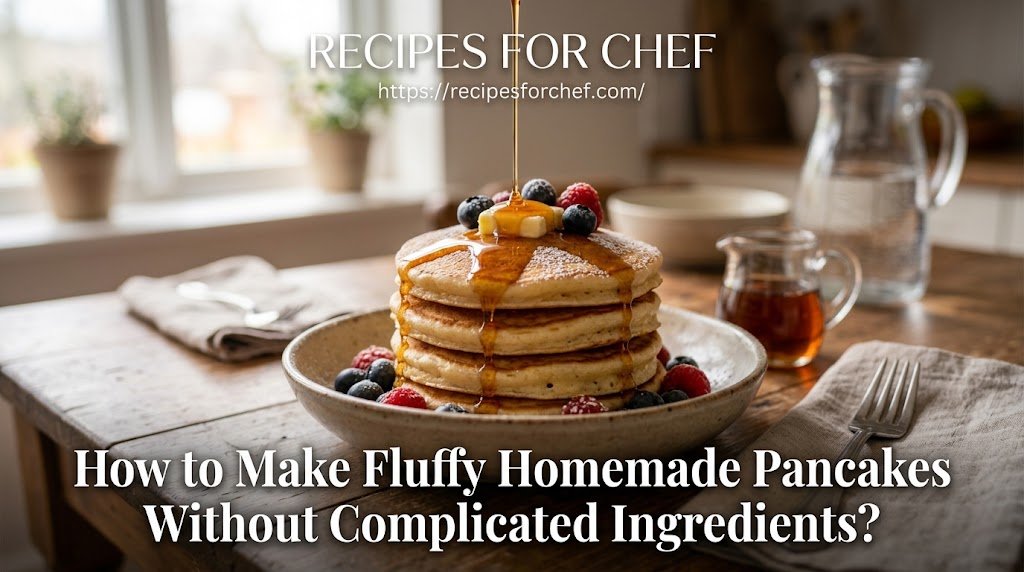
A good stack of homemade pancakes does not require a long ingredient list or a special baking mix. With flour, milk, an egg, baking powder, a little sugar, butter or oil, and a pinch of salt, you can make soft pancakes with lightly browned edges and a tender center.
The real trick is not adding more ingredients. It is handling the batter correctly.
Overmixing can make pancakes tough. Adding too much liquid can leave them thin and difficult to flip. A pan that is too hot may brown the outside before the center has cooked. Even the way you scoop the batter can affect how evenly the pancakes rise.
This recipe keeps those details simple and explains what to look for at each stage, so you can adjust the method based on how your batter and pan actually behave.
Recipe Overview
These pancakes are designed for an ordinary home kitchen. You do not need buttermilk, a stand mixer, unusual flours, or special equipment.
The batter is mixed by hand and cooked in a lightly greased skillet or griddle. Baking powder provides the main lift, while the egg helps give the pancakes structure.
Preparation time: 10 minutes
Cooking time: 15–20 minutes
Total time: About 25–30 minutes
Yield: About 10–12 pancakes, depending on size
Ingredients
- 2 cups (240 g) all-purpose flour
- 2 tablespoons granulated sugar
- 2 teaspoons baking powder
- ½ teaspoon salt
- 1 large egg
- 1¾ cups (420 ml) milk
- 3 tablespoons melted butter, slightly cooled
- 1 teaspoon vanilla extract, optional
- Butter or neutral cooking oil for the pan
These measurements produce a fairly thick batter. If your flour is packed tightly into measuring cups, the batter may become thicker than intended, which is one reason weighing the flour can make baking results more consistent.
Equipment You Need
You only need:
- A large mixing bowl
- A whisk
- A spatula
- A nonstick skillet, cast-iron skillet, or griddle
- A ladle or measuring cup for portioning the batter
A ¼-cup measure is convenient for making pancakes of similar size, but a spoon or small ladle works too.
Why These Simple Ingredients Make Fluffy Pancakes
Fluffy pancakes are mostly about controlling the batter and heat.
Flour provides the structure. All-purpose flour is convenient because it contains enough protein to hold the pancakes together without making them excessively dense when handled gently.
Baking powder creates gas bubbles as the batter heats, helping the pancakes rise. This is why an old container of baking powder can cause disappointing results even when everything else is done correctly.
Egg adds structure and richness. It also helps the batter hold together during flipping.
Milk provides the liquid needed to hydrate the flour and create a pourable batter.
Butter adds flavor and helps keep the pancakes tender. You can use a neutral oil if you prefer.
Sugar adds a little sweetness and helps the surface brown.
The important point is that none of these ingredients needs to be used in excess. More baking powder does not automatically mean taller pancakes, and more flour can make the batter heavy.
Prepare the Batter
Before mixing, melt the butter and let it cool for a few minutes.
If very hot butter is poured directly over the egg, it can partially cook the egg. Slightly cooled melted butter is easier to incorporate.
In a large bowl, whisk together the flour, sugar, baking powder, and salt.
In a second bowl or measuring jug, whisk the egg, milk, melted butter, and vanilla if using.
Pour the wet ingredients into the dry ingredients.
Now comes one of the most important steps: do not overmix.
Use a whisk or spatula to gently combine the ingredients until there are no large pockets of dry flour. A few small lumps are completely fine.
The batter should look thick and slightly uneven rather than perfectly smooth.
Why You Should Not Overmix Pancake Batter
When flour is mixed with liquid, gluten-forming proteins begin developing.
A small amount of gluten is useful because it gives the pancakes enough structure to hold together. Too much mixing, however, can make the pancakes chewy and dense rather than soft.
You do not need to beat the batter until every tiny lump disappears.
Once the dry flour has been incorporated, stop mixing.
This is one of those situations where doing less is actually useful.
Let the Batter Rest Briefly
Let the batter sit for about 5–10 minutes before cooking.
This short rest gives the flour time to absorb some of the liquid. The batter may become slightly thicker while it sits.
Do not leave the batter sitting for a very long time at room temperature. The short rest is enough for this recipe.
If the batter becomes extremely thick after resting, add a tablespoon or two of milk and gently fold it in.
What the Batter Should Look Like
The correct consistency is thick enough to mound slightly when spooned into the pan but loose enough to spread on its own.
When you lift the whisk, the batter should fall back into the bowl in a thick stream.
If it runs like milk, it is too thin.
If it sits in a stiff lump and barely moves, it is too thick.
This visual test is more useful than trying to follow a measurement blindly because flour absorbs different amounts of liquid depending on how it was measured and stored.
Heat the Pan Correctly
Place a skillet or griddle over medium heat.
Allow it to warm for several minutes before adding the batter.
Lightly grease the surface with butter or neutral oil.
The pan should be hot enough that the batter starts cooking immediately, but not so hot that the bottom becomes dark before bubbles have formed across the surface.
If the first pancake browns extremely quickly, lower the heat.
If the batter sits in the pan for a long time without showing signs of cooking, increase the heat slightly.
The first pancake can also act as a useful test for your pan temperature.
Cook the Pancakes
Scoop approximately ¼ cup of batter onto the skillet for each pancake.
Leave some space between them so you can flip them comfortably.
Cook for about 2–3 minutes on the first side.
Watch the surface rather than relying entirely on the timer.
You should see bubbles forming across the top. The edges should begin to look set, and the underside should be golden brown.
When several bubbles have formed and some of them remain open instead of immediately filling with batter, slide a spatula underneath and flip the pancake.
Cook the second side for another 1–2 minutes, or until golden brown and cooked through.
Do not press down on the pancake with your spatula. Flattening it pushes out some of the air that helped give it a lighter texture.
How to Know When a Pancake Is Ready to Flip
This is one of the most useful visual cues to learn.
A pancake is generally ready for flipping when:
- Bubbles have appeared across much of the surface.
- The edges look more defined and slightly dry.
- The bottom is golden brown.
- The batter around the edges is no longer completely wet.
You do not need to wait until every bubble has appeared.
If you flip too early, the top may still be very liquid and the pancake can spread or fold. If you wait too long, the bottom may become too dark.
After making the first pancake, you will usually have a much better idea of how quickly your particular pan cooks.
Why Your Pancakes May Not Be Fluffy
There are several possible causes.
The first is overmixing. If the batter was whisked aggressively for several minutes, the pancakes may become tougher.
The second is old baking powder. Baking powder loses effectiveness over time, especially if it has been exposed to moisture.
The third is batter consistency. Excessively thin batter tends to produce flatter pancakes.
The fourth is pan temperature. A pan that is too cool may allow the batter to spread before it begins setting. A pan that is too hot can brown the outside too quickly.
Finally, pancake batter can lose some of its lifting power if it sits around for too long. For the most predictable results, cook the batter relatively soon after mixing and resting.
Common Mistakes and How to Avoid Them
Using too much flour
Packing flour tightly into measuring cups can give you more flour than the recipe needs.
If you measure by volume, spoon the flour into the measuring cup and level it rather than scooping a compacted cup directly from the flour container.
For the most consistent results, use a kitchen scale and measure 240 grams.
Mixing until perfectly smooth
This is a common instinct, but pancake batter does not need to look like cake batter.
Small lumps usually disappear during cooking.
Once the flour is incorporated, stop mixing.
Making the pan too hot
High heat may seem like a shortcut, but pancakes need enough time for the center to cook while the outside develops a golden color.
Medium heat gives you more control.
Pressing the pancakes after flipping
It may be tempting to flatten a pancake with the spatula, especially if it has puffed up.
Leave it alone.
The trapped air contributes to its lighter texture.
Flipping repeatedly
One confident flip is usually better than turning the pancakes back and forth.
Repeated flipping can make it harder to judge doneness and may disturb the pancake before its structure has fully set.
What If the Batter Is Too Thick?
Add milk one tablespoon at a time.
Stir gently after each addition and check the consistency.
You are looking for batter that flows from a spoon but is still noticeably thicker than ordinary liquid.
Do not add a large amount of milk at once. It is much easier to loosen pancake batter gradually than to fix batter that has become too thin.
What If the Batter Is Too Thin?
Add a small amount of flour, about one tablespoon at a time.
Mix gently and allow the batter to sit for a minute before deciding whether it needs more.
Adding too much flour can make the pancakes heavy, so small adjustments are best.
Easy Ingredient Substitutions
Milk
Regular whole or reduced-fat milk works well.
You can also use unsweetened plant-based milk if needed. The final texture may vary slightly depending on the product, particularly if it has a very different thickness from dairy milk.
Butter
Use a neutral cooking oil instead of melted butter if you prefer.
Butter gives the pancakes a richer flavor, while oil can produce a slightly different texture and is convenient if you do not have butter available.
Sugar
The sugar can be reduced if you prefer less-sweet pancakes, particularly if you plan to serve them with sweet toppings.
Vanilla
Vanilla is optional. The pancakes work without it.
Flour
All-purpose flour is the simplest choice for this recipe. If you substitute another type of flour, expect the amount of liquid and final texture to change.
Whole wheat flour, for example, absorbs more liquid and can make pancakes denser. A partial substitution is generally easier to manage than replacing all the flour.
How to Make the Pancakes Ahead
Pancake batter is best used relatively soon after it is prepared, so if you need breakfast ready quickly, it is often more convenient to cook the pancakes in advance.
Place cooked pancakes in a single layer while they cool. Once cooled, refrigerate them in a covered container if you plan to eat them within the next few days.
For longer storage, separate pancakes with parchment or baking paper and place them in a freezer-safe container or bag.
This prevents them from freezing into one solid block.
Storage and Reheating
Cooked pancakes can be refrigerated in a covered container.
For longer storage, freeze them with sheets of parchment between individual pancakes.
To reheat refrigerated pancakes, use a skillet over low to medium heat, a toaster, or a microwave.
A toaster or skillet is useful when you want the edges to regain some texture. The microwave is faster but can make pancakes softer.
When reheating frozen pancakes, you can usually heat them directly from frozen. Use moderate heat and make sure the center is hot before serving.
Serving Suggestions
These pancakes are mild enough to work with a wide range of toppings.
Classic options include:
- Butter and maple syrup
- Fresh berries
- Sliced banana
- Yogurt and fruit
- Cinnamon and a little sugar
- Peanut or other nut butter
If you are serving several people, place toppings on the table rather than mixing them into the batter. This lets everyone adjust the sweetness to their preference.
For a less-sweet breakfast, fresh fruit and plain yogurt can balance the pancakes without requiring a heavily sweet topping.
Frequently Asked Questions
Why are my pancakes flat instead of fluffy?
Check the baking powder first, then consider the batter. Old baking powder may not provide enough lift, while very thin batter can spread too much. Overmixing can also make the finished pancakes heavier.
Should pancake batter have lumps?
Yes. Small lumps are normal and do not need to be removed. Overmixing the batter simply to make it perfectly smooth can produce tougher pancakes.
Why are my pancakes burning before the middle is cooked?
The pan is probably too hot. Lower the heat and give the pancakes more time to cook through. A moderate temperature allows the center to set before the outside becomes overly dark.
Can I make the pancake batter the night before?
For this particular recipe, freshly mixed batter gives more predictable results. If you need to prepare breakfast ahead, cooking the pancakes and refrigerating or freezing them is usually more convenient.
How much batter should I use for each pancake?
About ¼ cup is a useful starting point for medium-sized pancakes. You can use more or less depending on the size you want, but keep portions similar so they finish cooking at roughly the same time.
Can I make these pancakes without vanilla?
Yes. Vanilla is optional and does not provide the structure or lift of the pancakes.
Why did my pancakes become tough?
Overmixing is one of the most common causes. Another is cooking them too long or using too much flour. Mix only until the dry ingredients are incorporated and remove the pancakes once they are cooked through and lightly browned.
Final Thoughts
Fluffy homemade pancakes are less about complicated ingredients and more about simple technique. Measure the flour carefully, mix the batter gently, let it rest briefly, and cook over moderate heat.
Pay attention to the visual cues as the pancakes cook. When bubbles form, the edges set, and the underside is golden, you are much closer to a good flip than you would be by watching the clock alone.
Once you get comfortable with the batter consistency and your pan’s heat, this basic recipe becomes an easy starting point for many breakfasts.