
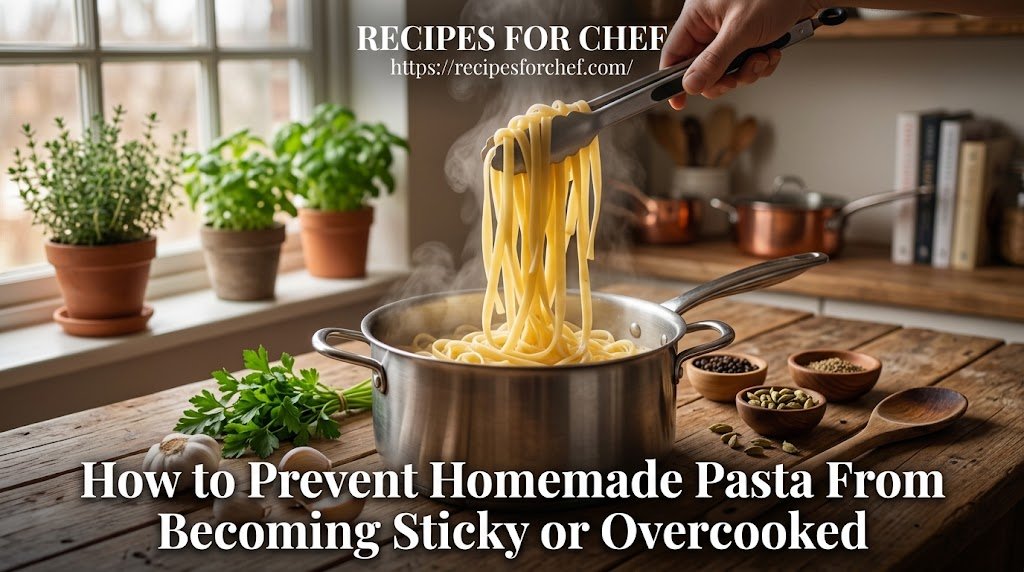
Homemade pasta can be wonderfully tender, but fresh pasta has a much smaller margin between properly cooked and overcooked than many dried pasta shapes. A few extra minutes in boiling water can turn delicate noodles soft and heavy, while poor handling before cooking can leave strands stuck together in one large mass.
The good news is that sticky or overcooked homemade pasta is usually caused by a few specific problems: pasta that is too wet, noodles that are not separated before cooking, insufficient boiling water, poor timing, or leaving the pasta in hot water after it has reached the right texture.
The key is to control the pasta from the moment it is rolled and cut until it reaches the plate. This guide explains how to dry and handle fresh noodles, how much water to use, when to stir, how to recognize the right texture, and what to do when something goes wrong.
Why Homemade Pasta Becomes Sticky
Fresh pasta contains more moisture than dried pasta, and that changes how it behaves.
When freshly cut noodles sit together while they are still damp, their surfaces can stick to one another. If the noodles are dropped into water in a large clump, the outside may soften before the individual strands have separated.
Starch released during cooking can also contribute to sticking. This is normal, but it becomes a bigger problem when there is not enough water, the noodles are crowded, or they are left sitting together after draining.
There is another issue that is easy to overlook: fresh pasta cooks quickly. If you are used to boiling dried pasta for several minutes, applying the same timing to homemade noodles can leave them far softer than intended.
The solution is not simply to add oil to the water. Good handling and timing matter much more.
Why Fresh Pasta Cooks Faster Than Dried Pasta
Dried pasta has been dehydrated and needs time in boiling water to absorb moisture and soften.
Fresh pasta already contains substantial moisture, so the cooking process is much shorter.
The exact time depends on thickness, shape, flour, hydration, and whether the pasta has been dried slightly before cooking. Thin fresh noodles may need only a short time in boiling water, while thicker shapes require longer.
Because of this variation, the clock should not be your only guide.
Start checking the pasta early. Taste a strand and look at its center. You want it cooked through but still able to hold its shape and offer some resistance when bitten.
How to Keep Fresh Pasta From Sticking Before Cooking
The first step is to prevent the noodles from sticking before they reach the pot.
After rolling and cutting the pasta, separate the strands gently with your fingers. Dust them lightly with flour or another suitable dry dusting ingredient according to your pasta recipe.
The goal is a light coating, not a thick layer.
Too much flour can create a different problem. Excess flour falls into the cooking water, making it cloudy and potentially affecting the texture of the finished sauce.
If you are making long noodles such as tagliatelle or fettuccine, you can loosely gather them into small nests after dusting. Do not compress the nests tightly. The noodles need enough separation to loosen easily when they enter the water.
For pasta that will sit for a while before cooking, spread it on a lightly floured tray or pasta drying rack instead of piling it into a deep bowl.
Do You Need to Dry Homemade Pasta?
Not always.
Fresh pasta can be cooked immediately after cutting. In fact, many cooks prefer cooking it shortly after preparation.
A brief period of air-drying can make some fresh noodles easier to handle, particularly when they are slightly delicate or moist. It allows the surface to lose some moisture and can reduce the chance of strands sticking together.
However, you do not want to leave fresh pasta exposed indefinitely. Very dry pasta can become brittle, and the cooking behavior changes as moisture is lost.
For most homemade pasta, the practical approach is to prepare the noodles, dust them lightly, keep them separated, and cook them reasonably soon.
Use a Large Pot of Rapidly Boiling Water
Fresh pasta needs enough room to move.
Choose a pot that is large enough to hold plenty of water without becoming dangerously full. Bring the water to a strong boil before adding the noodles.
If the water is only gently simmering when the pasta goes in, the temperature can drop considerably. This can make the noodles sit in hot water for longer before they begin cooking properly.
A strong boil also helps separate the pasta as you stir.
You do not need an enormous amount of water for every small batch, but avoid cramming a large quantity of fresh pasta into a small pot.
Should You Add Oil to Pasta Water?
For ordinary pasta cooking, adding oil to the water is not a reliable solution for sticky noodles.
Oil floats on the surface of the water rather than coating the pasta in a way that prevents sticking during cooking.
It can also make it harder for a sauce to cling to the pasta later if some oil remains on the noodles.
Instead, focus on keeping the water boiling, separating the noodles as they enter the pot, stirring at the right times, and cooking them promptly.
Salt the Cooking Water
Salt seasons the pasta as it cooks.
Add salt to the water once it is ready for cooking, following the style of pasta recipe you are using. The exact amount can vary depending on the quantity of water and the rest of the dish.
Salt does not prevent pasta from sticking, so it should not be treated as a substitute for proper handling.
Its main purpose here is seasoning rather than texture control.
Add Fresh Pasta Gradually
Do not dump a large tangled bundle of noodles into the center of the pot and hope they separate on their own.
If you have long fresh noodles, loosen them with your fingers first. Add them to the boiling water gradually, allowing the strands to spread across the surface.
Use a pasta fork, wooden spoon, or suitable utensil to gently move the noodles during the first moments of cooking.
This is especially important for long strands because they can stick together quickly when their surfaces are wet.
You do not need to stir aggressively. Gentle movement is enough to separate the strands without damaging delicate pasta.
When Should You Stir Homemade Pasta?
The first stir is particularly useful.
After adding the fresh noodles to boiling water, gently move them around so that strands separate from one another. Continue checking the pasta during cooking rather than stirring constantly.
Overhandling very fresh pasta can damage thin noodles.
The aim is to keep the strands moving enough to prevent them from forming a single mass while allowing the pasta to cook undisturbed between checks.
For filled pasta, be even gentler. Ravioli and similar shapes can be damaged by rough stirring.
How to Know When Fresh Pasta Is Cooked
The best test is to taste it.
Take out a strand or piece carefully and allow it to cool for a moment before tasting. The pasta should be tender but should still have some structure.
For long noodles, bite into a strand and pay attention to the center. It should not taste raw or floury, but it should not feel mushy.
Fresh pasta can move from undercooked to overcooked very quickly, especially when rolled thin.
That means you should start tasting early rather than waiting until the recipe’s maximum suggested cooking time.
Why Fresh Pasta Becomes Overcooked
Overcooking usually happens because the pasta is left in the boiling water too long.
This is easy to do when the sauce is not ready yet.
You may think, “I’ll leave the pasta cooking while I finish the sauce,” but fresh noodles can lose their ideal texture during that short delay.
Have your sauce ready before the pasta goes into the pot whenever possible.
The goal is for the pasta to finish cooking just as the sauce is ready to receive it.
Do Not Leave Fresh Pasta Sitting in Hot Water
Once the noodles have reached the texture you want, drain them promptly if they are going directly into the sauce.
Hot water continues to cook the pasta even after you have turned off the burner.
If you leave fresh noodles sitting in the pot, they can become soft and fragile.
This is one reason timing the sauce and pasta together is so useful. You want very little waiting between draining and saucing.
Save Some Pasta Water Before Draining
If you are making a sauce, reserve some of the cooking water before draining the pasta.
The starchy water can help loosen a thick sauce and help the sauce coat the noodles.
Add it gradually rather than pouring in a large amount at once.
The amount you need depends on the sauce. A creamy sauce may need only a small splash, while a thicker pan sauce may benefit from more.
Do not use the pasta water as a way to rescue severely overcooked pasta. It can improve sauce consistency, but it cannot restore the original structure of noodles that have been cooked too long.
Avoid Rinsing Fresh Pasta for a Hot Sauce
For most hot pasta dishes, rinsing the cooked noodles under cold water is unnecessary.
Rinsing removes surface starch that can help the sauce cling to the pasta.
There are exceptions, particularly when pasta is being cooled for a cold pasta salad or another preparation where you specifically want to stop the cooking process.
For a typical hot homemade pasta dish, drain and move the noodles directly into the prepared sauce.
Finish Fresh Pasta in the Sauce
One of the easiest ways to improve the final texture is to finish the pasta in the sauce rather than simply spooning sauce over drained noodles.
Transfer the cooked pasta into the pan with the sauce and gently toss.
If the sauce is too thick, add a small amount of reserved pasta water. Continue tossing until the noodles are coated.
This final step allows the pasta and sauce to come together rather than leaving the noodles sitting alone in a colander.
Because fresh pasta cooks quickly, make sure the sauce is ready before you start boiling the noodles.
What If Your Fresh Pasta Is Sticking Together?
If uncooked noodles have started sticking together, do not immediately pull hard on them.
Gently separate the strands with your fingers. If they are very moist, add a small amount of flour and toss the noodles carefully so the strands receive a light coating.
If the noodles have formed a dense mass, separate as much as you can without tearing them.
Then cook them promptly.
Once fresh pasta has become wet and compressed, it may be difficult to return it to its original condition. Prevention is much easier than trying to rescue a tangled batch.
What If Fresh Pasta Is Too Soft?
If the noodles are already overcooked, there is no reliable way to make them firm again.
The best response is to avoid adding additional cooking time. Drain them immediately and move them into the sauce.
If the texture is still acceptable, a sauce with some body can make the dish more enjoyable.
For future batches, reduce the cooking time and begin tasting earlier.
Keep in mind that pasta thickness has a major effect on cooking speed. If you rolled the dough thinner than usual, the same cooking time may no longer be appropriate.
What If Fresh Pasta Is Still Hard in the Center?
If the noodles are firm, floury, or visibly undercooked inside, continue cooking them briefly.
Taste again after a short interval rather than leaving them in the water for several additional minutes.
This is especially important with homemade pasta because small changes in thickness can create noticeable differences in cooking time.
A noodle that is slightly thicker at the edges may need more time than one rolled evenly thin.
Common Mistakes That Cause Sticky or Overcooked Pasta
Cutting the Pasta and Leaving It in a Wet Pile
Fresh noodles need separation. A deep pile allows moisture and pressure to make strands stick together.
Using Too Much Dusting Flour
A little flour can prevent sticking, but excessive flour can fall into the cooking water and affect the finished dish.
Adding Pasta Before the Water Is Properly Boiling
Fresh noodles cook quickly, so starting them in water that is not properly boiling can make timing less predictable.
Cooking the Pasta Before the Sauce Is Ready
This creates unnecessary waiting time and increases the chance of overcooking.
Relying Only on the Timer
A timer is useful, but thickness and shape affect fresh pasta more than many beginners expect.
Stirring Too Aggressively
Gentle movement is enough for most noodles. Excessive stirring can break delicate pasta.
Letting Cooked Pasta Sit in the Colander
Fresh pasta can cool and become sticky if it sits for too long without sauce.
Ingredient and Dough Considerations
The dough itself can influence how the finished pasta behaves.
A dough with excessive moisture may be difficult to roll and cut cleanly. Very wet noodles can also be more prone to sticking before cooking.
On the other hand, a dough that is too dry can crack during rolling and produce fragile noodles.
Flour type, egg size, humidity, rolling thickness, and kneading all influence the dough’s final consistency.
Rather than adding large amounts of flour automatically when the dough feels slightly sticky, adjust gradually. Too much extra flour can make the finished pasta tough.
The ideal dough should be workable and smooth enough to roll without constantly sticking to your hands or equipment.
Equipment That Makes Fresh Pasta Easier
A pasta machine can help create a more even thickness, which makes cooking more predictable.
A rolling pin can also work well, particularly for small batches, but maintaining an even thickness takes more attention.
A pasta drying rack is useful for keeping long noodles separated before cooking.
A large pot gives the pasta room to move, while a pasta fork or wooden spoon makes gentle stirring easier.
A kitchen timer is helpful, but remember that tasting is the final test of texture.
How to Plan Fresh Pasta and Sauce at the Same Time
Good timing solves many pasta problems before they happen.
Prepare the sauce first or have it very close to finished. Bring your pasta water to a boil while you are preparing the sauce, but do not add the noodles until you are ready to use them.
Once the pasta enters the water, stay nearby.
Taste early. Drain when the texture is right. Then transfer the pasta directly to the sauce.
If the sauce needs loosening, use reserved pasta water.
This sequence keeps the pasta from sitting around and gives you better control over the final texture.
Image Opportunities for This Article
[Image suggestion: Freshly cut pasta strands lightly dusted and separated on a tray]
[Image suggestion: Fresh tagliatelle being gently loosened before entering boiling water]
[Image suggestion: Properly cooked fresh pasta being lifted from the pot]
[Image suggestion: Fresh pasta being tossed with sauce in a skillet]
[Image suggestion: Comparison showing properly cooked and overcooked fresh pasta textures]
Frequently Asked Questions
How long should homemade pasta boil?
There is no single cooking time for all homemade pasta. Thickness, shape, dough composition, and how fresh or dry the noodles are can all affect the timing. Start checking early and taste a piece to judge the texture.
Why does my homemade pasta stick together before cooking?
The noodles may contain too much surface moisture, may have been left in a pile, or may not have been dusted lightly enough. Separate freshly cut noodles and use a light coating of flour when appropriate.
Should I put oil in the water to stop homemade pasta from sticking?
Oil is not necessary for preventing ordinary pasta from sticking. Properly boiling water, separating the noodles, and gently stirring them during cooking are more useful methods.
Should homemade pasta be dried before cooking?
It does not have to be. Fresh pasta can usually be cooked shortly after it is prepared. A short period of drying can make some noodles easier to handle, but they should not be left exposed until they become brittle.
How can I stop homemade pasta from becoming overcooked?
Have your sauce ready before cooking the pasta, start tasting early, and drain the noodles as soon as they reach the desired texture. Avoid leaving them in hot water while you finish other parts of the meal.
Should I rinse homemade pasta after cooking?
For most hot pasta dishes, no. Rinsing removes surface starch that can help sauce adhere to the noodles. Rinsing can make sense for preparations where the pasta needs to be cooled quickly, such as some cold pasta salads.
Can I fix homemade pasta that has been overcooked?
You cannot reverse the cooking process and restore firm texture. Drain it promptly, combine it with the sauce, and adjust your cooking time for the next batch. Starting to taste earlier is usually the most effective prevention.
Final Thoughts
Sticky or overcooked homemade pasta is usually less about needing a secret ingredient and more about controlling moisture, spacing, heat, and timing.
Keep fresh noodles separated before cooking, use plenty of actively boiling water, gently loosen them when they enter the pot, and start tasting early. Most importantly, have the sauce ready before the pasta is cooked so the noodles do not sit around waiting.
Fresh pasta rewards attention. Once you learn to judge its texture instead of relying entirely on a timer, it becomes much easier to serve noodles that are tender, separate, and well coated with sauce.