
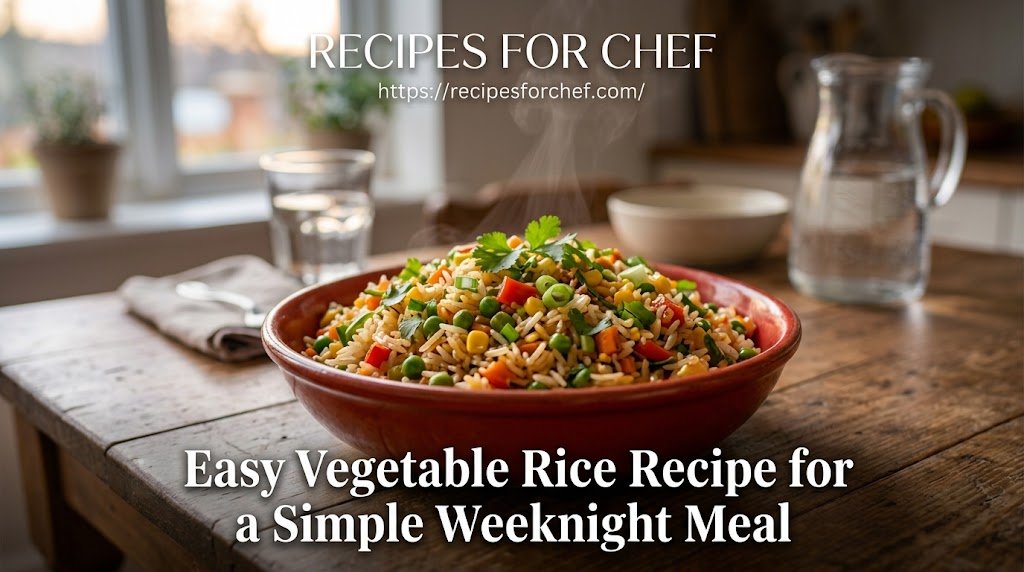
When you need a homemade dinner that is inexpensive, flexible, and easy to manage, vegetable rice is a useful recipe to keep in your kitchen rotation. It can be made with ordinary vegetables, pantry staples, and one pot, without requiring a complicated sauce or a long list of seasonings.
This version combines long-grain rice with carrots, peas, bell pepper, onion, and garlic. The vegetables are cooked briefly before the rice and broth are added, allowing their flavor to work into the cooking liquid. A little cumin and paprika add warmth without making the dish heavily spiced.
The method is just as important as the ingredients. Rinsing the rice, using the correct amount of liquid, keeping the heat controlled, and allowing the cooked rice to rest all help produce separate, tender grains instead of a wet or sticky mixture.
You can serve this vegetable rice as a light main dish, pair it with grilled chicken or fish, or use it as a side for another homemade meal.
Recipe Overview
This recipe is built for a normal weeknight rather than a special occasion. Most of the preparation involves chopping vegetables, and once the rice is covered and simmering, the cooking requires very little attention.
Preparation time: 15 minutes
Cooking time: 25–30 minutes
Total time: About 40–45 minutes
Servings: 4–5
The recipe uses long-grain white rice. If you change the type of rice, the cooking time and liquid requirements may also change.
Ingredients
- 1½ cups (about 300 g) long-grain white rice
- 2 tablespoons olive oil or neutral cooking oil
- 1 medium yellow onion, finely diced
- 2 medium carrots, peeled and diced
- 1 small bell pepper, diced
- 2 garlic cloves, minced
- ½ cup frozen peas
- 3 cups low-sodium vegetable broth
- 1 teaspoon ground cumin
- ½ teaspoon paprika
- ¾ teaspoon salt, or to taste
- ¼ teaspoon black pepper
- 1 bay leaf, optional
- 2 tablespoons chopped fresh parsley, optional
- 1 tablespoon fresh lemon juice, optional
If your broth is already well salted, start with less added salt. It is easier to add salt near the end than to correct a dish that has become too salty.
Equipment
You will need:
- A medium or large heavy-bottomed pot with a lid
- Fine-mesh strainer
- Cutting board
- Sharp knife
- Wooden spoon or spatula
- Measuring cups and spoons
A heavy pot helps distribute heat more evenly and reduces the chance of the rice scorching against the bottom.
Why This Vegetable Rice Works
Rice can look simple, but the cooking process is sensitive to the amount of water, heat, and stirring.
This recipe starts by cooking the onion, carrots, bell pepper, and garlic in oil. That step gives the vegetables a chance to soften and develop more flavor before they are covered with broth.
The rice is then added and briefly stirred with the vegetables and spices. This lightly coats the grains with oil and seasoning.
Once the broth is added, the rice cooks mostly undisturbed.
That last part matters. Rice releases starch as it cooks, and repeated stirring can make the finished dish stickier than you may want. For fluffy vegetable rice, you generally want to stir during the early stages, then leave the covered pot alone while the grains absorb the liquid.
Rinse the Rice Before Cooking
Place the rice in a fine-mesh strainer and rinse it under cool running water.
Move the grains gently with your fingers while rinsing until the water becomes less cloudy.
You do not need perfectly clear water. The goal is simply to remove some of the loose surface starch and any dust from the grains.
Drain the rice well.
This step is particularly useful when you want distinct grains. Skipping it does not guarantee failure, but unwashed rice can produce a stickier result depending on the rice itself and the cooking method.
Prepare the Vegetables
Dice the onion, carrots, and bell pepper into relatively small, similar-sized pieces.
The carrots should not be cut into large chunks because they take longer to soften than the bell pepper.
If you are using frozen peas, there is no need to thaw them first. They can be added directly during the cooking process.
Mince the garlic shortly before cooking. Freshly minced garlic adds a noticeable aroma, but it can burn quickly if left alone in hot oil.
Step-by-Step Method
1. Cook the onion
Place the pot over medium heat and add the oil.
Add the diced onion and cook for about 3–4 minutes, stirring occasionally.
The onion should become softer and slightly translucent.
You do not need to brown it deeply. If it begins turning dark quickly, lower the heat.
2. Add the carrots and bell pepper
Add the diced carrots and bell pepper.
Cook for another 3–4 minutes, stirring occasionally.
The vegetables do not need to be completely tender yet. They will continue cooking with the rice.
You should notice the carrots beginning to soften around the edges while the bell pepper becomes slightly more tender.
3. Add the garlic and spices
Stir in the minced garlic, cumin, paprika, black pepper, and bay leaf if using.
Cook for about 30 seconds.
Keep stirring during this short step. Garlic can burn easily, especially in a hot pot with very little moisture.
4. Add the rice
Add the rinsed and well-drained rice.
Stir gently for about 1 minute, coating the grains with the oil and vegetables.
You do not need to fry the rice aggressively. A brief coating is enough.
At this stage, the grains should remain intact rather than becoming soft.
5. Add the broth
Pour in the vegetable broth and add the salt.
Stir once to distribute the ingredients evenly.
Bring the mixture to a gentle boil.
Taste the liquid carefully before the rice absorbs it. This is your opportunity to check the seasoning. The cooking liquid should taste pleasantly seasoned but not excessively salty.
6. Cover and simmer
Once the liquid reaches a gentle boil, reduce the heat to low.
Cover the pot with a tight-fitting lid and cook for approximately 15–18 minutes.
Avoid repeatedly lifting the lid.
Steam trapped inside the pot is part of the cooking process. Every time you remove the lid, some heat and moisture escape, which can interfere with the rice cooking evenly.
The exact cooking time may vary depending on your rice, pot, and stovetop.
7. Add the peas
If you want the peas to retain a brighter color and fresher texture, add them during the final 5 minutes of cooking.
You can scatter them over the rice without stirring deeply.
If you prefer very soft peas, add them earlier.
8. Check the rice
After the estimated cooking time, turn off the heat and carefully check a few grains.
The rice should be tender without being mushy.
If there is still a noticeable amount of liquid and the rice is already tender, leave the lid off for a minute or two so some moisture can evaporate.
If the rice is still firm and the pot looks dry, add a few tablespoons of hot broth or water, cover again, and cook for several more minutes.
Avoid adding a large amount of cold liquid at once because it can disrupt the cooking temperature.
9. Let the rice rest
Turn off the heat and leave the pot covered for 5–10 minutes.
This resting period is easy to skip when dinner is waiting, but it helps.
The remaining steam continues to distribute moisture through the rice, and the grains become easier to separate.
After resting, remove the lid and gently fluff the rice with a fork.
Do not vigorously stir it with a spoon. A fork separates the grains with less crushing.
How the Finished Rice Should Look
Properly cooked vegetable rice should have tender grains that remain mostly separate.
The vegetables should be soft enough to bite comfortably but should still have some shape.
There should not be a pool of broth at the bottom of the pot.
If the rice looks wet immediately after cooking, give it a few minutes to rest before deciding that something went wrong. The resting stage can make a noticeable difference.
If the rice is mushy, the most likely causes are too much liquid, overcooking, or excessive stirring.
Tips for Better Results
Use the correct rice
Long-grain white rice is a convenient choice because it tends to produce separate grains when cooked properly.
Short-grain rice contains more starch and naturally becomes stickier. That does not make it bad, but it creates a different dish.
Brown rice requires more liquid and a longer cooking time, so it should not be substituted using the same measurements without adjusting the method.
Keep the vegetables reasonably small
Large pieces can create an uneven bite.
Small, similar-sized pieces distribute more evenly through the rice and tend to cook at roughly the same rate.
Avoid excessive stirring
Once the broth has been added and the rice begins cooking, resist the urge to stir repeatedly.
Stirring can release more starch and disturb the way the grains cook.
Control the heat
A strong boil is not necessary.
Once the liquid begins simmering, reduce the heat enough to maintain a gentle simmer underneath the lid.
If the heat is too high, the liquid can disappear before the rice is fully cooked, and the bottom may scorch.
Common Mistakes and How to Fix Them
The rice is mushy
This usually points to too much liquid, overcooking, or excessive stirring.
Once the rice is fully tender, stop cooking it. Do not leave it on the heat simply because you are waiting for the vegetables to become softer.
If the vegetables need more cooking time, cut them smaller next time or give them a longer head start before adding the rice.
The rice is still hard
There may not have been enough liquid, or the heat may have been too low.
Add a few tablespoons of hot water or broth, cover the pot, and continue cooking over low heat.
If the bottom is already sticking while the rice is still hard, transfer the rice to another pot if necessary and continue cooking gently rather than scraping aggressively at the scorched layer.
The bottom of the pot burned
The heat was probably too high, the pot may have had a thin base, or the liquid may have evaporated too quickly.
For future batches, use a heavier pot and lower the heat once the liquid begins simmering.
Do not scrape a burnt layer into the finished rice. That can spread a bitter flavor throughout the dish.
The vegetables are too soft
Cutting vegetables too small or adding them very early can make them lose their texture.
For vegetables that cook quickly, add them later. Frozen peas are a good example.
The rice is bland
Rice absorbs a surprising amount of seasoning, so under-seasoned cooking liquid can lead to a dull final dish.
Taste the broth before covering the pot and adjust the salt carefully.
Fresh lemon juice and chopped parsley added after cooking can also brighten the finished dish.
Easy Substitutions and Variations
This recipe is flexible enough to work with many vegetables.
Frozen mixed vegetables
A frozen mixed vegetable blend can replace the carrots, peas, and bell pepper. Add it according to the cooking time needed by the particular mixture.
Frozen vegetables are especially useful when you want to reduce chopping on a busy evening.
Corn
Sweet corn can be added along with the peas. Frozen or canned corn both work.
If using canned corn, drain it well first.
Broccoli
Cut broccoli into small florets and add it during the later part of cooking. Adding it too early can make the florets very soft.
Green beans
Fresh green beans should be cut into small pieces so they cook more evenly. Add them with the carrots if you want them soft, or somewhat later for more texture.
Chickpeas
For a more filling vegetarian meal, add drained and rinsed canned chickpeas toward the end of cooking.
Because the chickpeas are already cooked, they only need to heat through.
Herbs
Parsley is a simple finishing herb, but cilantro, dill, or a small amount of fresh mint can also work depending on the rest of the meal.
Do not feel that you need several herbs at once. One fresh herb can be enough.
Turning Vegetable Rice Into a Complete Dinner
Vegetable rice can be served as the main dish, particularly when chickpeas or another protein source is added.
It also works well as a side dish.
Serve it alongside grilled chicken, roasted fish, baked chicken thighs, or simple pan-cooked vegetables.
A spoonful of plain yogurt on the side can add a cool contrast to the warm, seasoned rice.
For a quick family meal, you can prepare the rice while another protein cooks separately. Because the rice mostly cooks unattended once the lid goes on, this can make dinner easier to coordinate.
Storage and Reheating
Transfer leftover rice to shallow containers and refrigerate it promptly.
Rice deserves particular care during storage because bacteria such as Bacillus cereus can be associated with cooked rice and other starchy foods. The concern is not that rice is inherently unsafe, but that improper cooling and storage can allow bacteria or toxins to become a problem.
Keep cooked rice refrigerated and avoid leaving it sitting at room temperature for extended periods.
For reheating, add a small splash of water before warming the rice in a covered pan or microwave-safe container.
Heat until steaming hot throughout, stirring where appropriate to distribute the heat.
Only reheat the portion you intend to eat rather than repeatedly heating and cooling the entire batch.
Serving Suggestions
A squeeze of lemon over the finished rice is an easy way to brighten the flavor.
Fresh parsley adds color and a mild herbal note.
For a heartier plate, serve the rice with grilled chicken or fish.
For a vegetarian meal, add chickpeas and serve with plain yogurt or a simple cucumber salad.
You can also spoon the rice into a bowl and top it with a fried egg for a quick lunch or dinner.
Frequently Asked Questions
Can I use brown rice for this recipe?
Yes, but not with the same cooking time and liquid ratio. Brown rice has a different cooking requirement and usually needs substantially more time and liquid. Follow the instructions for the specific brown rice you are using and adjust the vegetables accordingly.
Why did my vegetable rice become sticky?
Too much liquid, excessive stirring, or using a naturally sticky rice variety can cause this. Rinsing long-grain rice, using the correct liquid amount, and avoiding stirring during the covered cooking stage can help produce more separate grains.
Can I use frozen vegetables?
Yes. Frozen peas and mixed vegetables are particularly convenient. They do not usually need to be thawed first. Add them at a point that allows them to heat through without becoming excessively soft.
Can I cook this vegetable rice without broth?
Yes. Water can be used, but broth provides more flavor. If using water, season the cooking liquid carefully with salt and your preferred herbs or spices.
Can I add chicken to the rice?
You can serve cooked chicken alongside it or stir cooked chicken into the finished rice. If you want to cook raw chicken in the same pot, the recipe needs to be adjusted so the chicken and rice both cook safely and evenly. For a quick weeknight meal, using already-cooked chicken is simpler.
Why is my rice hard even though all the liquid is gone?
The heat may have been too high, causing the liquid to evaporate before the rice finished cooking. Add a small amount of hot water or broth, cover the pot, and continue cooking gently.
Should I stir rice while it cooks?
Try not to. Stirring during the early stage can distribute ingredients, but once the rice is simmering under the lid, repeated stirring can release starch and make the finished rice stickier.
Final Thoughts
Simple vegetable rice becomes much easier once you stop treating it as a recipe that must be followed blindly by the minute. Watch the liquid, control the heat, and pay attention to the texture of the rice.
Rinse the grains, give the vegetables a short head start, keep the covered simmer gentle, and let the finished rice rest before fluffing it. Those small steps are more important than adding a long list of seasonings.
Once you understand the basic method, you can change the vegetables according to what you already have in the refrigerator and still end up with a useful homemade weeknight meal.
Image Opportunities
[Image suggestion: Finished vegetable rice showing separate grains and colorful vegetables]
[Image suggestion: Rinsed long-grain rice and chopped vegetables prepared before cooking]
[Image suggestion: Onion, carrots, and bell pepper sautéing in the cooking pot]
[Image suggestion: Rice and vegetables covered with broth just before simmering]
[Image suggestion: Finished rice being gently fluffed with a fork]
Suggested Internal Linking Opportunities
Anchor text: “easy rice recipes for dinner”
Suggested destination: A relevant rice recipe or rice category on RecipesForChef.com.
Anchor text: “simple vegetable side dishes”
Suggested destination: A vegetable side-dish recipe or category.
Anchor text: “easy chicken dinner recipes”
Suggested destination: A chicken dinner recipe that pairs well with vegetable rice.
Anchor text: “quick weeknight meals”
Suggested destination: A collection of quick family-friendly dinner recipes.
Anchor text: “easy vegetarian dinner recipes”
Suggested destination: A vegetarian recipe category or related meat-free dinner.
SEO Title: Easy Vegetable Rice for a Simple Weeknight Meal
Meta Description: Make easy vegetable rice with carrots, peas, peppers, and simple seasonings. Get practical tips for fluffy rice, substitutions, storage, and reheating.
URL Slug: easy-vegetable-rice-recipe
Primary Keyword: easy vegetable rice recipe
Secondary Keywords: vegetable rice recipe, easy rice dinner, simple weeknight meal, rice with vegetables, homemade vegetable rice, easy vegetarian rice, one-pot rice recipe, quick rice dinner